Singing lessons offer powerful developmental benefits for children—especially those who are homeschooled. Beyond simply learning how to carry a tune, structured vocal training nurtures cognitive growth, emotional well-being, social skills, and academic performance. For homeschooling families seeking enriching extracurricular activities, voice lessons provide a well-rounded, research-supported addition to a child’s education.

Why Singing Lessons Are Good for Children

1. Boosts Brain Development and Academic Skills

Music education is strongly linked to improved memory, language processing, and concentration. Singing strengthens neural pathways associated with reading, comprehension, and verbal expression. Studies from institutions such as Johns Hopkins University suggest that musical training enhances cognitive flexibility and executive functioning—skills essential for academic success.

For homeschooled children, singing lessons can:

  • Improve phonics and reading fluency

  • Enhance listening skills

  • Support memorization abilities

  • Strengthen focus and discipline

2. Builds Confidence and Self-Esteem

Voice lessons encourage children to express themselves freely in a safe, supportive environment. Performing songs, mastering vocal techniques, and achieving measurable progress all contribute to increased self-confidence.

Homeschooled students may have fewer daily public performance opportunities compared to traditional classrooms. Regular recitals, auditions, or even informal performances at home provide valuable confidence-building experiences.

3. Encourages Emotional Expression and Mental Wellness

Singing is a natural emotional outlet. It helps children process feelings, reduce stress, and regulate emotions. Research from the American Psychological Association highlights how music participation can lower anxiety and improve mood in children.

For homeschooled children who may spend more time in smaller social settings, singing lessons offer:

  • Creative emotional expression

  • Stress relief

  • Improved mood regulation

  • A healthy outlet for energy

4. Enhances Social Development

Even in one-on-one lessons, children learn communication skills, listening, and collaboration. When participating in group classes, choirs, or community theater programs, homeschooled children expand their social circle and gain teamwork experience.

Programs such as children’s choirs or local music groups provide opportunities for social interaction, helping homeschooled students build friendships and practice cooperative learning.

5. Improves Breathing, Posture, and Physical Health

Proper vocal training teaches diaphragmatic breathing, posture alignment, and body awareness. These skills contribute to:

  • Stronger lung capacity

  • Better posture

  • Clearer speech

  • Improved overall vocal health

Healthy breathing techniques also support relaxation and mindfulness practices, which benefit children academically and emotionally.

6. Develops Discipline and Goal Setting

Learning to sing well requires consistent practice, patience, and constructive feedback. Children learn how to:

  • Set achievable goals

  • Practice regularly

  • Receive and apply feedback

  • Work toward long-term improvement

These habits translate directly into stronger study routines and personal responsibility—essential qualities in successful homeschool environments.

7. Supports Well-Rounded Homeschool Curriculum

Homeschooling offers flexibility to integrate arts education deeply into daily learning. Singing lessons complement subjects such as:

  • History (through studying classical composers or folk traditions)

  • Language arts (through lyric analysis and storytelling)

  • Science (understanding vocal anatomy and sound waves)

This interdisciplinary learning approach enriches the overall homeschool experience and keeps children engaged.

Why Singing Lessons Are Especially Beneficial for Homeschooled Children

Homeschool families often prioritize individualized education. Singing lessons align perfectly with this philosophy because they are:

  • Customized to the child’s learning pace

  • Adaptable to different musical styles and interests

  • Flexible in scheduling

  • Available both in-person and online

Additionally, structured music training provides homeschooled children with:

  • Performance milestones

  • External mentorship

  • Peer interaction opportunities

  • A creative outlet outside core academics

Long-Term Benefits of Singing Lessons

Children who participate in music education often carry lifelong skills into adulthood. Singing helps develop:

  • Public speaking confidence

  • Leadership abilities

  • Emotional intelligence

  • Creative thinking

Whether a child pursues music professionally or simply enjoys it as a hobby, the foundational skills gained through singing lessons positively influence personal growth and academic achievement.

Singing lessons are more than extracurricular activities—they are powerful tools for whole-child development. For homeschooled children, voice training enhances cognitive growth, emotional resilience, social interaction, and academic enrichment. By incorporating structured singing lessons into a homeschool curriculum, parents provide their children with a creative, confidence-building, and brain-boosting educational advantage.

If you're considering ways to enrich your child’s homeschool journey, investing in professional singing lessons could be one of the most impactful decisions you make.

Online Vocal Tips & Vocal Health Training | Miranda-Roza Vocal Coach

Online Vocal Tips for Healthy, Confident Singing

Welcome to your trusted source for online vocal education, designed to help singers of all ages develop a strong, healthy, and confident voice. Whether you're a beginner or growing vocalist, these expert vocal tips will guide you in improving technique, protecting your voice, and singing without strain.

Learn to Sing Without Pain or Vocal Strain

Singing should feel free — not forced. Here you’ll discover practical guidance on vocal health, proper posture, breath control, resonance, and safe vocal warm-ups. My online singing education focuses on building healthy muscle coordination so you can sing high notes with confidence and clarity.

What You’ll Learn on This Vocal Tips Page:

  • ✔ How to prevent throat pain when singing
  • ✔ Safe vocal warm-ups for daily practice
  • ✔ Breath support techniques for stronger sound
  • ✔ Posture tips for better vocal projection
  • ✔ How to build confidence as a singer

If you're ready to strengthen your voice through professional, supportive, and faith-filled vocal guidance, explore the tips below or book an online lesson to start your vocal journey today.

How Singing Lessons Stimulate Brain Development

When you sing, your brain coordinates breathing, pitch control, language processing, memory recall, emotional interpretation, and motor control—all at once. This complex integration strengthens neural pathways and improves overall brain efficiency.

Research from institutions like Harvard University has demonstrated that music training increases connectivity between the left and right hemispheres of the brain. Singing lessons, in particular, enhance communication through the corpus callosum—the structure responsible for inter-hemispheric coordination.

This leads to improved:

  • Cognitive flexibility

  • Problem-solving skills

  • Multi-tasking ability

  • Creative thinking

Singing Lessons Improve Memory and Learning Capacity

One of the most widely recognized cognitive benefits of singing is improved memory retention. When students memorize lyrics, melodies, and breathing patterns, they engage both short-term and long-term memory systems.

Studies supported by the National Institutes of Health indicate that musical training enhances verbal memory and auditory processing skills. Because singing involves language and rhythm, it reinforces neural circuits responsible for reading, comprehension, and speech development.

This is especially beneficial for:

  • Students developing literacy skills

  • Individuals learning a new language

  • Adults maintaining cognitive sharpness

Boosts Language Processing and Communication Skills

Singing directly activates the brain’s language centers, including Broca’s area and Wernicke’s area. These regions are essential for speech production and comprehension.

Vocal training improves:

  • Pronunciation and articulation

  • Listening accuracy

  • Rhythm and speech timing

  • Vocabulary retention

For children, singing lessons can support early phonemic awareness. For adults, they enhance public speaking and communication confidence.

Enhances Emotional Regulation and Mental Health

Singing is neurologically linked to the release of dopamine and endorphins—chemicals associated with pleasure and reward. This makes voice training a natural mood booster.

The American Psychological Association has highlighted music participation as an effective method for reducing stress and anxiety. Singing also lowers cortisol levels, the body’s primary stress hormone.

Brain-related mental health benefits include:

  • Reduced anxiety

  • Improved mood stability

  • Greater emotional resilience

  • Increased self-confidence

Group singing further enhances social bonding by stimulating oxytocin release, strengthening feelings of connection and belonging.

Strengthens Focus and Executive Function

Singing lessons require disciplined attention to pitch accuracy, breathing control, timing, and vocal technique. This structured practice improves executive functioning skills, including:

  • Sustained concentration

  • Self-monitoring

  • Goal setting

  • Working memory

  • Task management

Over time, consistent vocal training enhances mental stamina and attention span—key components of academic and professional success.

Supports Neuroplasticity and Brain Longevity

Neuroplasticity refers to the brain’s ability to adapt and form new neural connections. Singing lessons actively promote neuroplasticity because they combine auditory, motor, emotional, and cognitive processing.

Research in music neuroscience suggests that lifelong musical engagement may delay cognitive decline and support brain health in aging adults. Regular singing challenges the brain in ways that maintain flexibility and processing speed.

Singing Lessons and Whole-Brain Activation

Unlike passive listening to music, singing is an active neurological workout. It engages:

  • The auditory cortex (sound processing)

  • The motor cortex (vocal muscle control)

  • The limbic system (emotions)

  • The prefrontal cortex (decision-making and planning)

This whole-brain activation makes singing lessons one of the most comprehensive cognitive training tools available.

Why Structured Singing Lessons Are More Effective Than Casual Singing

While singing casually has benefits, professional singing lessons provide:

  • Guided technique for optimal brain engagement

  • Targeted vocal exercises that strengthen auditory discrimination

  • Structured repetition that reinforces neural pathways

  • Personalized feedback that enhances learning efficiency

This intentional practice accelerates cognitive benefits compared to informal singing alone.

Singing lessons are a powerful form of brain training that enhance memory, language skills, emotional regulation, focus, and neuroplasticity. Backed by research from leading institutions, vocal training supports both immediate cognitive performance and long-term brain health.

Whether you're enrolling a child in music education or pursuing lessons as an adult, singing is not just an artistic skill—it’s an investment in brain development and mental well-being.

Singing Lessons Nourish Emotional Expression

At its core, singing is storytelling through sound. Professional voice lessons help individuals safely and confidently express emotions—joy, hope, sadness, excitement—through music.

According to insights shared by the American Psychological Association, engaging in music can significantly improve emotional well-being and reduce psychological stress. Singing activates emotional centers of the brain, allowing feelings to move outward rather than remain bottled inside.

Spiritual benefits of emotional expression include:

  • Greater self-awareness

  • Emotional release and healing

  • Increased inner calm

  • Improved resilience

For many students, singing lessons become a sanctuary where they can express themselves without judgment.

Builds Inner Confidence and Self-Worth

One of the most profound spiritual benefits of singing lessons is confidence. Learning to control the voice—an instrument that is part of your body—creates a deep sense of personal empowerment.

Each milestone achieved in vocal training reinforces:

  • Self-trust

  • Courage

  • Positive identity development

  • Healthy risk-taking

Over time, students begin to feel more comfortable being seen and heard, which strengthens their sense of purpose and belonging.

Encourages Mindfulness and Presence

Singing requires focus on breath, posture, tone, and emotional intention. This creates a natural form of mindfulness.

Breath control techniques taught in professional singing lessons are similar to those used in meditation practices. In fact, organizations such as Johns Hopkins University have explored how music participation supports stress reduction and emotional balance.

When students sing:

  • They slow their breathing

  • They focus on the present moment

  • They release distractions

  • They enter a flow state

This mindful engagement nourishes the spirit by quieting mental noise and encouraging inner peace.

Creates a Sense of Connection and Community

Throughout history, singing has united communities—from cultural celebrations to sacred ceremonies. Group singing in choirs, ensembles, or recitals fosters a deep sense of unity.

Shared musical experiences:

  • Strengthen social bonds

  • Increase empathy

  • Promote compassion

  • Reduce feelings of isolation

Spiritually, connection is essential. Singing lessons often lead to collaborative performance opportunities that help students feel part of something greater than themselves.

Provides Hope and Inspiration

Music has the power to uplift during difficult seasons of life. Singing meaningful lyrics can inspire hope, gratitude, and perspective.

Whether performing classical repertoire, contemporary songs, or sacred music, students often report feeling emotionally renewed after lessons or performances.

Singing reminds individuals that:

  • Their voice matters

  • Their story has value

  • Their emotions are valid

  • Beauty can be created even during challenges

That sense of purpose is deeply nourishing to the spirit.

Supports Stress Relief and Emotional Healing

Scientific research consistently shows that singing lowers cortisol (the stress hormone) and increases dopamine and endorphins—the body’s natural “feel-good” chemicals.

These physiological responses translate into spiritual renewal:

  • Reduced anxiety

  • Elevated mood

  • Emotional clarity

  • A sense of lightness and release

Unlike passive entertainment, singing is active participation in healing.

Strengthens Identity and Authentic Self-Expression

Finding one’s voice—literally and figuratively—is a powerful spiritual journey. Singing lessons help students discover their unique tone, style, and artistic identity.

Rather than imitating others, structured training guides singers toward authenticity. This alignment between inner self and outward expression builds spiritual integrity and confidence.

Singing Lessons as a Lifelong Source of Joy

Singing is accessible at any age. Whether a young child discovering music for the first time or an adult reconnecting with a passion, vocal training offers lifelong fulfillment.

The spiritual benefits of singing lessons include:

  • Daily joy and inspiration

  • Emotional balance

  • Stronger self-connection

  • Renewed creativity

  • A meaningful artistic outlet

Singing lessons go far beyond technique and performance. They cultivate confidence, emotional healing, mindfulness, connection, and joy. By strengthening both the inner and outer voice, structured vocal training becomes a powerful tool for spiritual growth.

If you are considering voice lessons for yourself or your child, know that you are investing not just in musical skill—but in emotional well-being, self-expression, and a stronger, more resilient spirit.

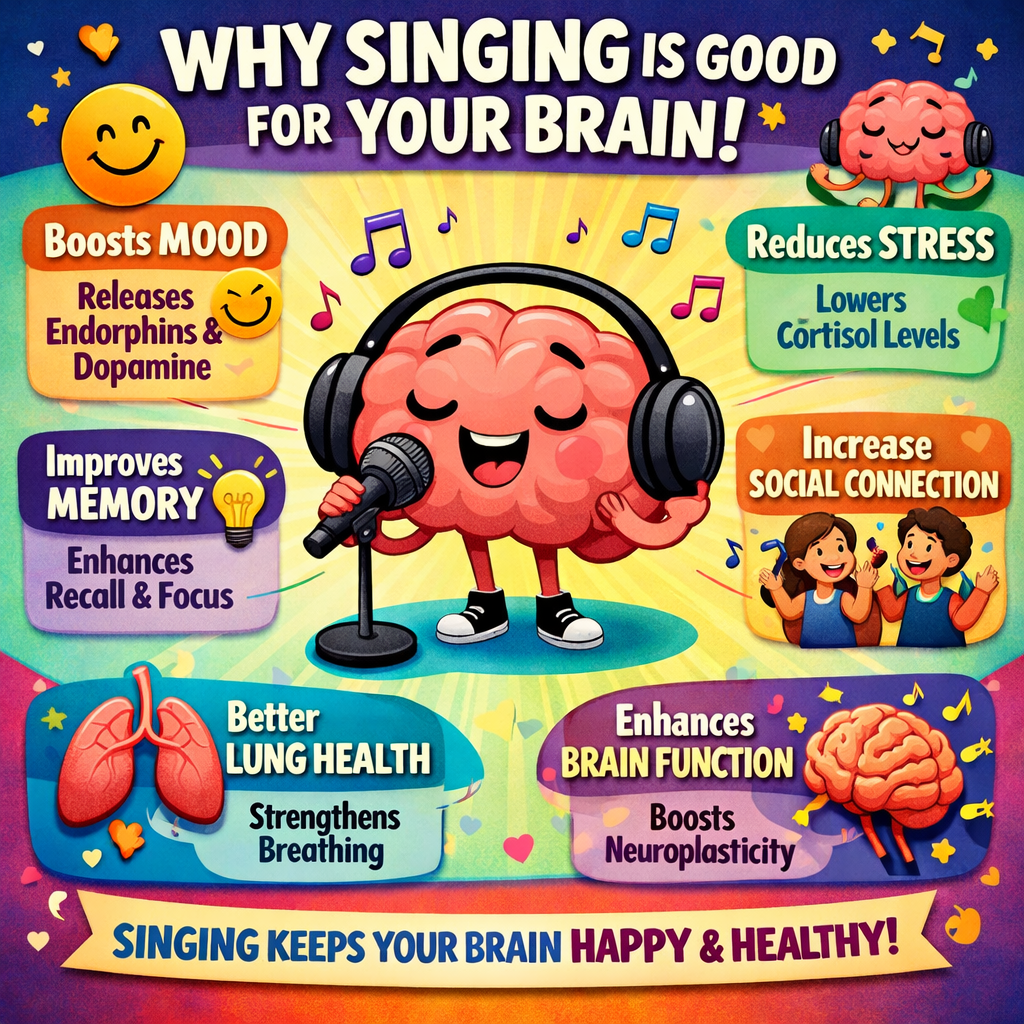
Singing Lessons Help Reduce Stress and Anxiety

One of the most immediate mental health benefits of singing is stress relief. Singing activates deep breathing patterns that calm the nervous system and lower cortisol—the body’s primary stress hormone.

Research highlighted by the American Psychological Association shows that music participation can significantly decrease stress and anxiety levels. Controlled breathing exercises used in professional voice training mirror techniques used in mindfulness and therapeutic practices.

Benefits include:

  • Slower heart rate

  • Reduced muscle tension

  • Lower cortisol levels

  • Improved emotional regulation

Regular singing lessons create a consistent outlet for releasing daily stress in a healthy, constructive way.

Singing Boosts Mood and Fights Depression

When you sing, your brain releases dopamine and endorphins—chemicals responsible for pleasure, motivation, and happiness. This natural “feel-good” response can help combat symptoms of mild to moderate depression.

Studies supported by the National Institutes of Health suggest that musical engagement positively impacts mood and emotional well-being. Singing, in particular, combines physical movement, breathwork, and emotional expression—making it especially therapeutic.

Mental health improvements may include:

  • Increased positive emotions

  • Reduced feelings of isolation

  • Greater motivation

  • Improved overall mood stability

Enhances Emotional Expression and Processing

Many people struggle to verbalize complex emotions. Singing provides a structured, creative way to express feelings that may otherwise remain unspoken.

Through lyrics and musical interpretation, students learn to:

  • Identify emotions

  • Safely express vulnerability

  • Process difficult experiences

  • Develop emotional intelligence

This form of artistic expression can serve as a powerful complement to therapy or personal growth practices.

Builds Self-Confidence and Self-Esteem

Low self-esteem is often connected to anxiety and depressive symptoms. Singing lessons help individuals build confidence in a supportive environment.

Mastering vocal techniques, performing in front of others, and reaching musical milestones all reinforce a sense of accomplishment. Over time, singers often experience:

  • Greater self-assurance

  • Improved body language

  • Stronger communication skills

  • Increased willingness to take healthy risks

Confidence gained in music frequently carries over into school, work, and relationships.

Strengthens Social Connection and Reduces Isolation

Human connection is essential for mental wellness. Singing lessons—especially in group settings such as choirs or ensembles—promote belonging and shared purpose.

Group singing stimulates oxytocin, a hormone associated with bonding and trust. This can help reduce loneliness and strengthen interpersonal relationships.

Social mental health benefits include:

  • Improved empathy

  • Increased sense of community

  • Reduced social anxiety

  • Greater interpersonal confidence

Improves Focus and Mental Clarity

Structured vocal training requires attention to pitch, rhythm, breath control, and emotional interpretation. This multi-layered concentration strengthens executive functioning and mental discipline.

According to research from institutions like Harvard University, music training enhances cognitive flexibility and attention control. Improved focus often leads to reduced mental overwhelm and better stress management.

Supports Long-Term Emotional Resilience

Consistent singing lessons teach perseverance, patience, and healthy coping skills. Students learn how to:

  • Accept constructive feedback

  • Manage performance anxiety

  • Work toward long-term goals

  • Celebrate progress

These skills contribute to emotional resilience—a key factor in maintaining strong mental health over time.

Singing as a Holistic Mental Health Practice

Unlike passive entertainment, singing is active engagement. It integrates breathwork, movement, cognition, creativity, and emotional release into one experience.

The combined mental health benefits of singing lessons include:

  • Reduced anxiety

  • Elevated mood

  • Improved self-esteem

  • Better stress management

  • Enhanced social connection

  • Stronger emotional regulation

Because it addresses both the mind and body, singing lessons offer a holistic approach to psychological well-being.

Singing lessons provide far more than vocal improvement—they nurture emotional balance, confidence, connection, and resilience. With growing scientific support from respected institutions, vocal training is increasingly recognized as a valuable component of mental wellness.

Whether you’re enrolling a child in music education or exploring voice lessons as an adult, singing can become a powerful, research-backed tool for improving mental health and enhancing quality of life.

Why Singing Is Good for Your Lungs: Powerful Breathing Benefits Every Singer Should Know!

Singing is not only a beautiful form of artistic expression—it is also incredibly beneficial for your lung health and overall breathing capacity. When you sing, your lungs work more efficiently as you learn to control your breath, expand your lung capacity, and strengthen the muscles involved in breathing. Proper singing techniques encourage deep diaphragmatic breathing, which allows more oxygen to enter the body and improves the efficiency of your respiratory system.

Unlike shallow breathing, which many people develop through stress and poor posture, singing trains the body to take fuller, deeper breaths. This strengthens the diaphragm, intercostal muscles (the muscles between the ribs), and the abdominal muscles that support breath control. Over time, singers often experience improved lung endurance, better oxygen flow, and stronger breath support.

Regular singing can also help improve posture, which further supports healthy lung function. When the body is aligned correctly, the lungs have more space to expand, allowing you to breathe more deeply and efficiently. This is one reason why vocal training often includes posture and body awareness as part of healthy vocal technique.

Research has also shown that singing can benefit people with certain respiratory conditions because it encourages controlled breathing patterns. By practicing breath control and sustained airflow through singing exercises, individuals can improve their ability to manage breath and build stronger respiratory muscles.

Beyond the physical benefits, singing is also excellent for emotional and mental well-being. Deep breathing during singing helps relax the nervous system, reduce stress, and increase oxygen levels in the brain, which can improve mood, focus, and overall energy.

Whether you are a beginner singer, a professional vocalist, or someone who simply enjoys singing for fun, developing healthy vocal techniques can greatly benefit your lungs and breathing system. Understanding how your voice works and learning proper breath support can help you sing more freely while strengthening your body at the same time.

If you would like to learn more about vocal health, breathing techniques, and how to develop a strong, healthy voice, book a free 30min trial lesson and begin your journey toward confident and healthy singing today.


Why Vocal Health and Understanding Your Voice Are Essential for Singers, Speakers, and Professionals

Your voice is one of your most powerful tools, whether you’re singing, teaching, public speaking, or communicating in your daily life. Maintaining optimal vocal health is not just about avoiding strain or hoarseness—it’s about understanding how your voice works and using it in a way that maximizes performance, longevity, and expressiveness. By learning the mechanics of your vocal cords, proper breath support, posture, and muscle coordination, you can prevent common vocal issues such as fatigue, strain, and long-term damage.

For singers, vocal health directly impacts tone, pitch control, range, and endurance, allowing you to perform with confidence and precision. For teachers, public speakers, and professionals who rely on their voice daily, proper vocal technique ensures clarity, projection, and stamina, even during long presentations or multiple speaking engagements. Understanding your voice also allows you to identify and correct inefficient habits that may limit your potential or lead to vocal injury.

Investing time in vocal care—through exercises, warm-ups, hydration, and rest—helps maintain your voice for the long term while boosting overall confidence and communication skills. Whether you are a beginner or an experienced performer, knowing how your voice works is essential for unlocking your full vocal potential, enhancing expressiveness, and achieving sustainable vocal strength. Prioritize your vocal health today to ensure your voice remains powerful, versatile, and resilient for years to come.

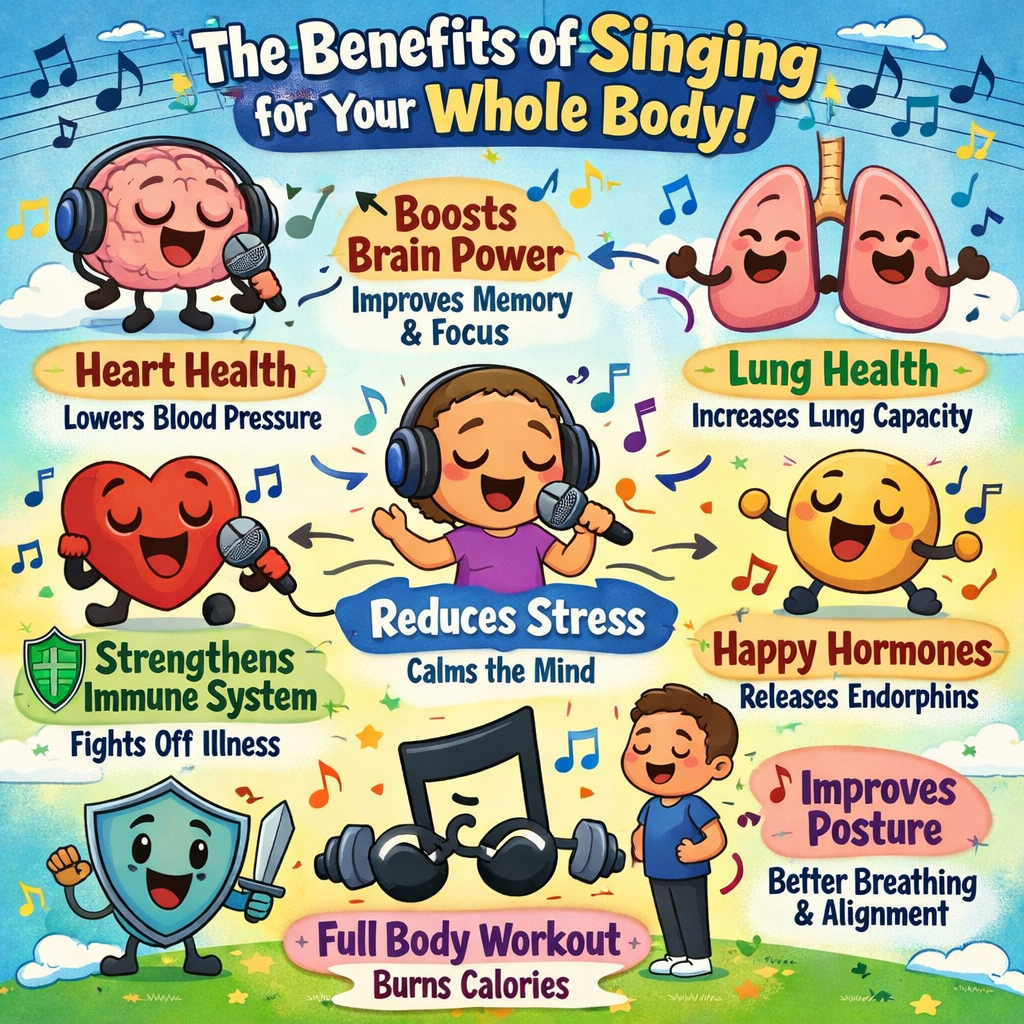
Why Singing Is Good for Your Whole Body: The Powerful Health Benefits of Singing for the Brain, Lungs, Heart, and Mind


Singing is far more than a beautiful form of self-expression—it is a powerful activity that supports the health of the entire body. When you sing, you engage multiple systems at once, including your respiratory system, muscles, brain, and emotional wellbeing. This makes singing one of the most holistic activities for both physical and mental health.


One of the most powerful benefits of singing is improved lung capacity and breathing control. Singing teaches the body to use deep diaphragmatic breathing, which strengthens the lungs and improves oxygen flow throughout the body. This type of breathing can increase endurance, support better respiratory health, and help singers develop stronger vocal control.


Singing also has incredible benefits for the brain and cognitive function. When you sing, your brain is actively processing rhythm, pitch, language, and memory at the same time. This stimulates neural pathways that can improve concentration, memory retention, and mental sharpness. It is a wonderful activity for both young learners and adults who want to keep their minds active.


Another important benefit is the positive impact singing has on emotional wellbeing and stress reduction. Singing releases endorphins and dopamine—often referred to as “happy hormones.” These natural chemicals help reduce stress, improve mood, and create a sense of calm and joy. Many people find that singing becomes a natural form of emotional release and mental relaxation.


Singing can also support heart health and circulation. Because singing involves controlled breathing and sustained airflow, it encourages better oxygen delivery to the body and can even help lower stress-related blood pressure levels.Additionally, singing encourages better posture and body awareness. Proper singing technique involves alignment of the spine, relaxed shoulders, and balanced muscle engagement. Over time, singers develop stronger posture habits that benefit the whole body.


Finally, singing helps strengthen the immune system and overall vitality. The combination of breathwork, emotional expression, and physical engagement makes singing a unique full-body activity that promotes overall wellbeing.Whether you sing professionally, teach vocals, or simply enjoy singing for fun, understanding vocal health and how the voice works can make a significant difference in protecting and strengthening your voice.


Singing truly is one of the most natural and powerful ways to support physical health, emotional balance, and vocal wellbeing.

Why Singing Is Good for Your Heart


Did you know that singing is not only good for your voice — it’s also incredibly beneficial for your heart and overall well-being?
When we sing, our bodies activate a powerful combination of breath control, muscle engagement, and emotional expression. This process naturally supports heart health in several remarkable ways.

Singing reduces stress. When you sing, your body releases endorphins and oxytocin, the “feel-good” hormones that help lower cortisol levels, the hormone responsible for stress. Lower stress levels can have a positive impact on heart health.

Singing improves circulation. Proper singing technique encourages deep diaphragmatic breathing, which increases oxygen intake. This improved oxygen flow helps your blood circulate more efficiently, allowing your heart to work more effectively.

Singing strengthens your breathing muscles. The muscles involved in healthy singing support better lung capacity and controlled breathing, which can contribute to improved cardiovascular function over time.

Singing can help lower blood pressure. Research shows that singing in a relaxed and controlled way can promote calmness and relaxation, which may help lower blood pressure and support a healthier heart.

Singing boosts emotional health. Music has a powerful effect on the brain. Singing can increase happiness, boost mood, and reduce anxiety, all of which are important for long-term heart health.

Whether you are a professional singer, teacher, speaker, or someone who simply loves to sing, learning how your voice works and practicing healthy vocal techniques can make a big difference not only for your voice — but for your overall health.

As a vocal health coach, I am passionate about helping people understand their voices and develop strong, healthy singing habits that allow their voices to flourish safely and confidently.

Why Singing Is Good for Your Immune System | The Health Benefits of Vocal Training & Vocal Health


Research shows that singing can help increase antibodies, reduce stress hormones, and support healthy breathing — all of which play an important role in supporting your body's natural defenses.

When you sing, your body engages in deep breathing, muscle coordination, and emotional expression. This combination helps improve lung function, reduce cortisol levels, and release endorphins, which can contribute to better overall health and wellbeing.


This is one of the many reasons why vocal health and understanding how your voice works is so important. Whether you are a singer, teacher, public speaker, pastor, or someone who simply uses their voice daily, learning how to care for your voice can protect it and help it grow stronger.

As a vocal coach passionate about vocal health, I love helping students understand how their voice works so they can sing with confidence, freedom, and proper technique.If you would like to learn more about vocal health, voice training, and strengthening your voice safely, visit my website to explore my vocal coaching and vocal health resources.


Your voice was designed to blossom and bloom when cared for properly.

Why Singing Improves Oxygen Levels | The Science Behind Vocal Health & Breathing

Did you know that singing can significantly improve your oxygen levels and overall respiratory health?
When you sing, you naturally engage in deep, controlled breathing, which allows more oxygen to enter your lungs and circulate throughout your body. This process strengthens the respiratory muscles, increases lung capacity, and improves the efficiency of oxygen exchange in the bloodstream.


Singing is more than just making music — it’s a powerful vocal health exercise that benefits your entire body.


Regular singing can help: 

Increase oxygen intake 

Strengthen the lungs and breathing muscles 

Improve posture and breathing control 

Support better circulation 

Boost mood and energy through natural endorphin release


For singers, speakers, teachers, and anyone who uses their voice regularly, understanding how your voice works and how to support healthy breathing is essential for long-term vocal strength and stamina.
As a vocal coach passionate about vocal health and helping others discover their voice, I teach students how to breathe correctly, engage the right muscles, and sing in a way that supports both healthy vocal function and strong oxygen flow.


If you'd like to learn how to protect and strengthen your voice through proper vocal technique and breathing, explore my vocal health resources and lessons on my website.


Discover how to strengthen your voice and breathing!

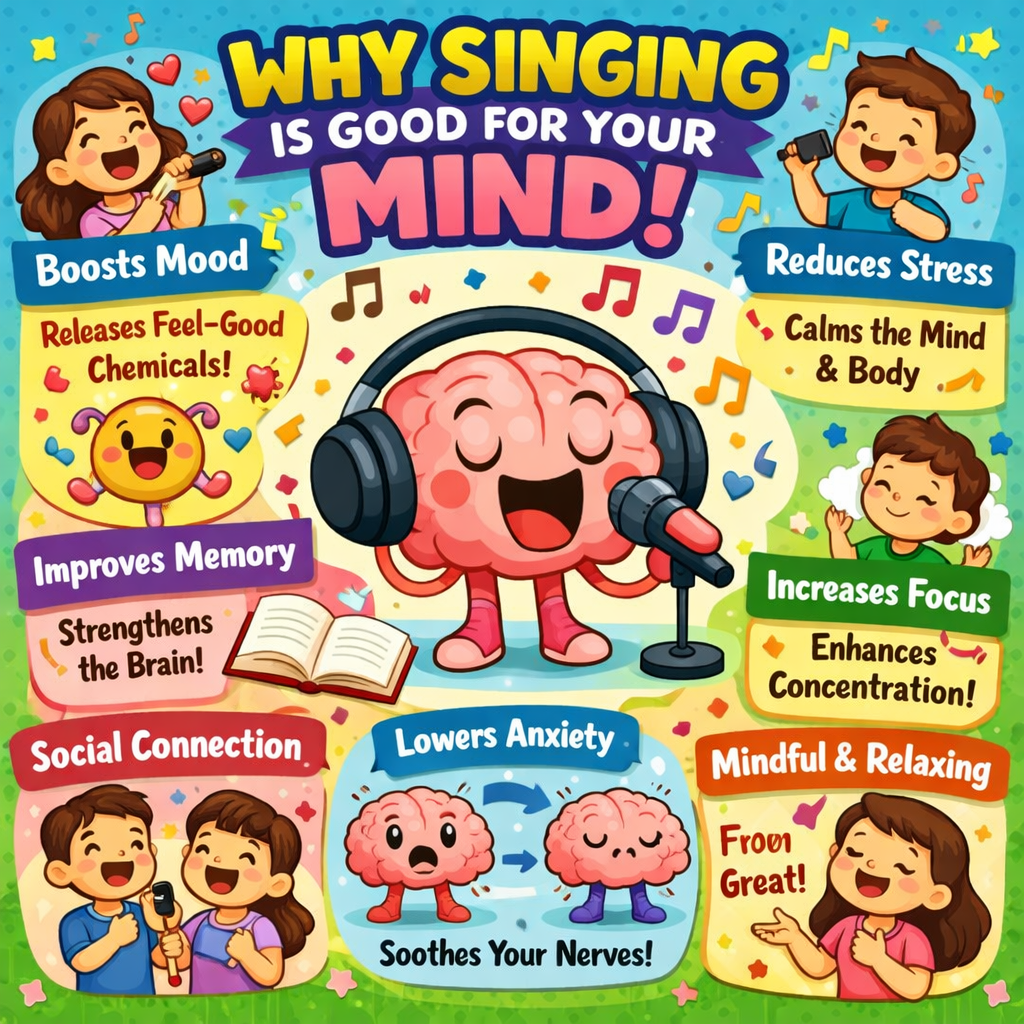
Why Singing Is Good for the Mind: Powerful Mental Health Benefits for Children

Singing is far more than just a fun activity—it’s a powerful tool for supporting a child’s mental, emotional, and cognitive development. When children sing regularly, multiple areas of the brain are activated at the same time, creating a unique “whole-brain workout” that supports learning, emotional regulation, and overall wellbeing.

One of the most immediate benefits of singing is its impact on mood. When children sing, the brain releases “feel-good” chemicals such as dopamine, serotonin, and endorphins. These help create feelings of happiness and pleasure, making singing a natural mood booster. At the same time, singing can lower cortisol levels (the stress hormone), which helps children feel calmer and more relaxed. This is especially valuable for children who may struggle with anxiety, overstimulation, or emotional regulation.

Singing also plays a key role in brain development and memory. Learning songs involves remembering lyrics, melodies, rhythm, and timing—all of which strengthen neural connections. This improves memory retention, listening skills, and concentration. For younger children, singing supports language development by expanding vocabulary, improving pronunciation, and reinforcing patterns in speech. This is why songs are often used to teach basics like the alphabet, numbers, and storytelling.

Another important benefit is improved focus and attention. Singing requires children to listen carefully, follow patterns, and stay in rhythm, which trains their ability to concentrate. Over time, this can carry over into academic settings, helping children stay more engaged in tasks like reading, writing, and problem-solving.

Emotionally, singing gives children a safe and healthy outlet for self-expression. Many children don’t yet have the words to explain how they feel, but music allows them to express emotions like joy, excitement, sadness, or frustration in a natural way. This helps build emotional intelligence and self-awareness, which are essential for mental wellbeing.

Singing also reduces anxiety and promotes a sense of calm through controlled breathing. Proper singing techniques encourage deep, steady breathing, which activates the body’s relaxation response. This can help children manage nerves, improve resilience, and feel more grounded in stressful situations.

Socially, singing—especially in groups—fosters connection and a sense of belonging. Whether it’s singing in a class, choir, or at home with family, children learn to collaborate, listen to others, and build confidence in a supportive environment. This can be particularly beneficial for shy children, as singing helps them come out of their shell and feel more comfortable expressing themselves.

Finally, singing encourages mindfulness and being present in the moment. When children focus on the music, their voice, and the rhythm, they naturally become more aware of their bodies and emotions. This mindful state can improve overall mental clarity and reduce feelings of overwhelm.

In essence, singing nurtures the mind by combining creativity, learning, emotional expression, and relaxation into one joyful activity. For children, it builds confidence, strengthens the brain, supports mental health, and creates a positive foundation for lifelong wellbeing.

Breath Control: The Secret Foundation to Powerful, Confident Singing

Breath control is the foundation of great singing—it’s the engine behind your voice. No matter how naturally talented someone is, without proper breath support, the voice can sound weak, unstable, or strained. When you learn to control your breath effectively, everything in your singing improves: tone, pitch, power, endurance, and overall confidence.

At its core, breath control in singing is about managing airflow, not just taking a deep breath. Many beginners think singing is simply about “breathing in more,” but great singers focus on how they release that air. Controlled, steady airflow allows the vocal cords to vibrate efficiently, producing a clear, rich, and consistent sound. Without that control, notes can sound shaky, breathy, or forced.

A key element of breath control is diaphragmatic breathing, often called “belly breathing.” Instead of raising your shoulders and taking shallow breaths into your chest, you engage the diaphragm—a dome-shaped muscle below the lungs. When you inhale properly, your ribcage expands and your abdomen gently moves outward. This creates a stable reservoir of air that you can manage with precision as you sing.

Good breath support helps you sustain long notes effortlessly. Rather than pushing or straining, you’re able to “ride” the breath, maintaining even pressure as the note continues. This is what allows singers to hold powerful notes, execute smooth phrases, and transition seamlessly between different parts of their range.

Breath control also plays a crucial role in pitch and vocal stability. When airflow is inconsistent, pitch tends to wobble or crack. With steady breath support, your voice becomes more reliable, making it easier to stay in tune and maintain a polished sound. It also reduces tension in the throat, which is one of the most common issues singers face.

Another major benefit is vocal health. Poor breathing habits often lead singers to compensate by tightening their throat or forcing sound, which can cause fatigue or even damage over time. Proper breath control takes the pressure off the vocal cords, allowing them to function freely and safely. This means you can sing longer, practice more effectively, and protect your voice for the long term.

Breath control is also what gives singers expressive power. It allows you to shape phrases, control dynamics (singing softly or loudly), and add emotion to your performance. A well-controlled breath can make the difference between a flat, lifeless delivery and a performance that truly connects with listeners.

Ultimately, mastering breath control is what transforms singing from something that feels effortful into something that feels natural and free. It gives you control over your voice instead of your voice controlling you. Whether you’re a beginner or an experienced singer, developing strong breath support is one of the most important steps you can take toward singing with confidence, ease, and excellence.

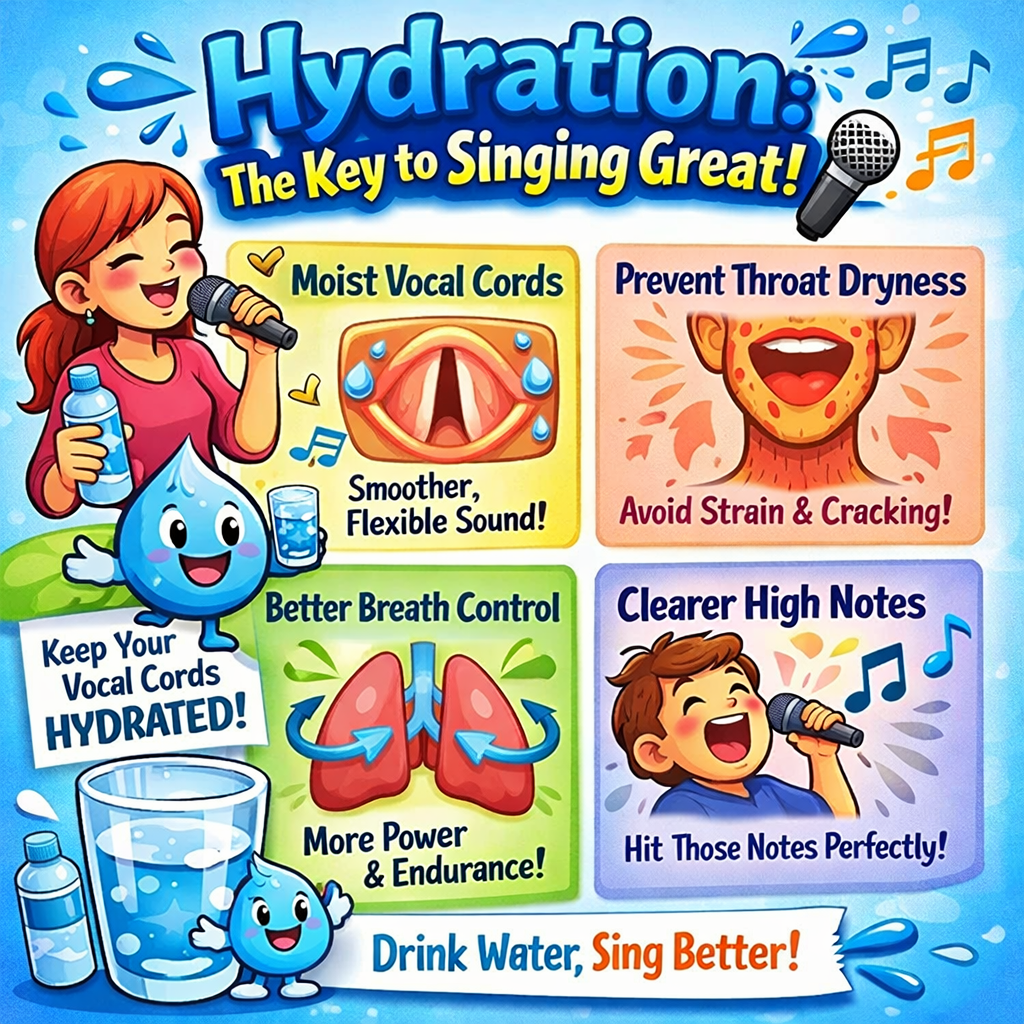
Hydration for Singers: Why Drinking Water Improves Vocal Health, Tone & Performance

Hydration is one of the most powerful yet overlooked tools for improving your singing voice. For singers, drinking enough water is essential to maintain optimal vocal health and performance. When your body is well-hydrated, your vocal cords stay lubricated and flexible, allowing them to vibrate efficiently and produce a smoother, richer, and more controlled sound.

Proper hydration helps prevent common vocal issues such as dryness, irritation, cracking, and strain—especially when singing high notes or performing for long periods. It also supports better breath control, giving you more power, stamina, and endurance while singing. Whether you're practicing daily, recording, or performing live, staying hydrated can significantly enhance vocal clarity, tone quality, and consistency.

Dehydration, on the other hand, can lead to tightness in the throat, vocal fatigue, and even long-term damage if not managed properly. That’s why singers should make hydration a daily habit, not just something to think about before a performance.

For best results, aim to drink water consistently throughout the day rather than all at once. Combine hydration with good vocal habits like proper warm-ups, posture, and rest to unlock your full vocal potential.

If you're serious about improving your voice and protecting your instrument, hydration is your foundation. Start singing lessons now!


Mastering Vocal Tone in Singing: How to Improve Your Voice Quality, Clarity & Warmth

Tone is one of the most important elements of great singing, shaping how your voice sounds, feels, and connects with listeners. Whether you are a beginner, a developing vocalist, or an experienced singer, understanding and improving your vocal tone can transform your overall sound.

In singing, tone refers to the quality, color, and texture of your voice—whether it sounds warm, bright, rich, breathy, or powerful. A well-developed tone allows singers to express emotion more effectively, maintain vocal control, and create a unique and recognizable sound.

Improving your singing tone starts with proper vocal technique. Breath support plays a crucial role in producing a steady, controlled sound, while good posture and relaxation help prevent strain and tension. Vocal placement, resonance, and articulation also contribute to a clear, balanced tone that carries well without forcing the voice.

Learning how to shape your vowels, open your throat, and use resonance chambers (such as the chest, mouth, and head) can dramatically enhance your tone quality. Additionally, regular vocal exercises, warm-ups, and consistent training help strengthen your voice and develop a more polished, professional sound over time.

At its core, great tone is about balance—finding the perfect blend of airflow, vocal cord coordination, and resonance. With the right guidance and practice, singers can develop a tone that is not only technically strong but also emotionally engaging.

Whether you're singing for fun, performance, or professional growth, mastering vocal tone will help you sing with confidence, clarity, and beauty.

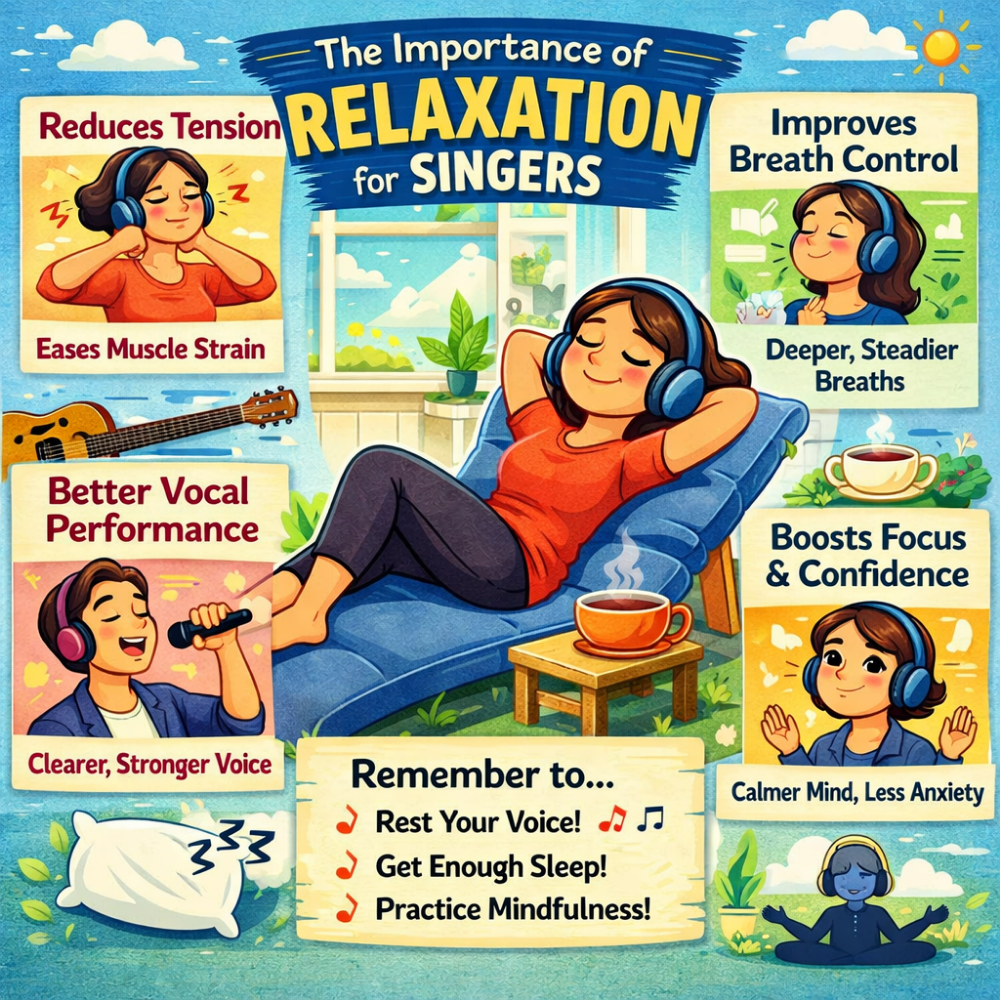
Why Relaxation is Essential for Singing: Improve Vocal Control, Tone, and Confidence Naturally


Relaxation is one of the most powerful yet often overlooked foundations of healthy, effective singing. Whether you are a beginner or an experienced vocalist, learning how to release tension in your body can dramatically improve your vocal performance, tone quality, and overall confidence.


When a singer is tense, the muscles around the neck, shoulders, jaw, and diaphragm become restricted. This tension directly affects breath control, making it harder to sustain notes, control pitch, and produce a clear, resonant sound. By contrast, a relaxed body allows for deeper, more controlled breathing—giving singers the support they need for stronger and more stable vocals.


Relaxation also plays a crucial role in vocal health. Excess tension can lead to strain, fatigue, and even long-term vocal damage. Incorporating relaxation techniques such as mindful breathing, gentle stretching, and proper posture helps protect the voice while enhancing endurance and flexibility.
In addition, relaxation improves mental focus and reduces performance anxiety. A calm mind allows singers to connect more deeply with their music, express emotion authentically, and perform with greater confidence and ease.


Key benefits of relaxation for singers include:


Improved breath control and support

Reduced vocal strain and tension

Clearer tone and stronger vocal projection

Increased vocal stamina and flexibility

Enhanced focus and reduced anxiety


As a vocal coach, I emphasize the importance of building a strong, relaxed foundation before focusing on advanced techniques. When the body and mind are at ease, the voice can function freely—unlocking its true potential.


If you're looking to improve your singing through healthy, sustainable techniques, I offer guidance focused on vocal health, relaxation, and confidence-building.

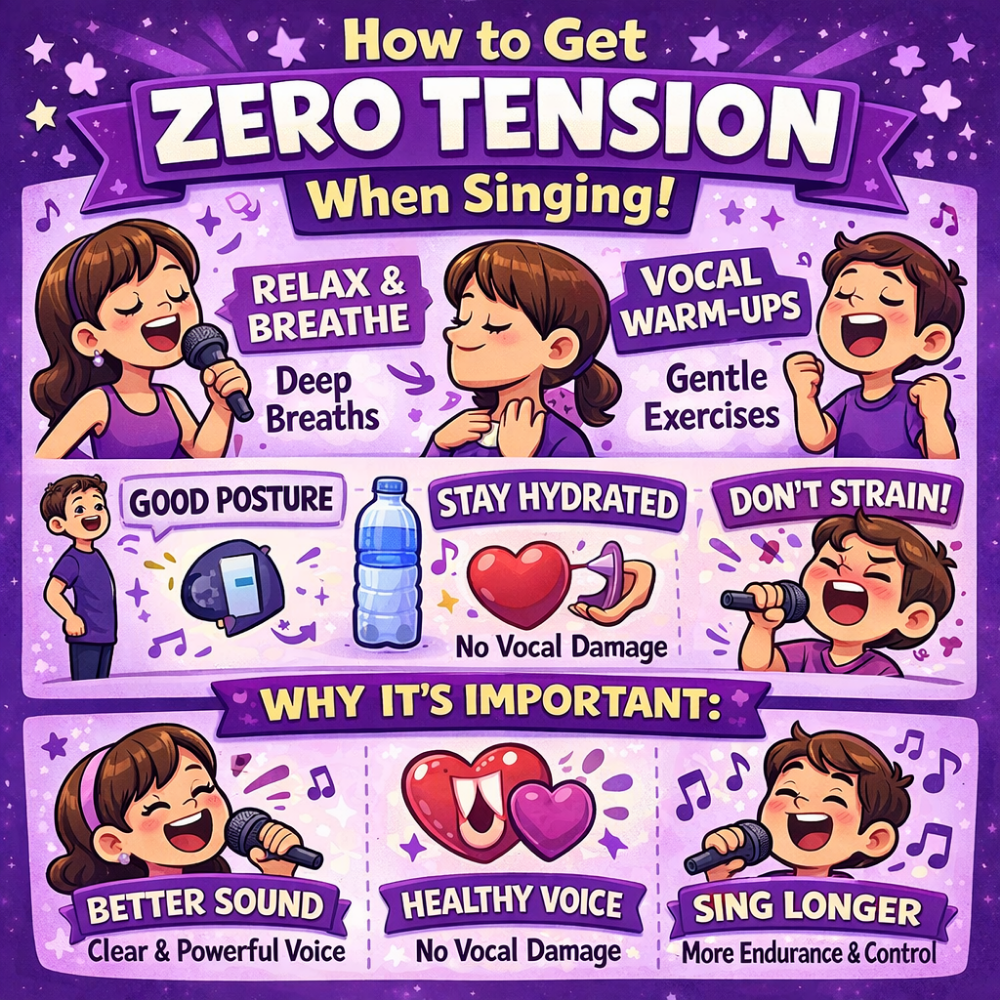
How to Get Zero Tension When Singing (And Why It’s So Important for Your Voice)

Achieving zero tension when singing is one of the most important foundations of healthy, powerful, and sustainable vocal performance. Whether you are a beginner or a professional vocalist, learning how to sing without tension can dramatically improve your tone, range, control, and overall vocal health.

Many singers unknowingly develop tension in the neck, jaw, shoulders, and throat, which restricts the natural movement of the vocal cords. This tension not only affects sound quality but can also lead to vocal strain, fatigue, hoarseness, and even long-term vocal damage. That’s why understanding how to release tension while singing is essential for building a strong and healthy voice.

How to Get Zero Tension When Singing

To achieve a relaxed and tension-free singing voice, it’s important to focus on a few key techniques:

1. Relax and Breathe Properly
Deep, diaphragmatic breathing is the foundation of tension-free singing. Instead of shallow chest breathing, focus on expanding your lower ribs and abdomen. Proper breath support reduces pressure on your vocal cords and allows for smoother, more controlled singing.

2. Do Gentle Vocal Warm-Ups
Warming up your voice prepares your vocal cords and surrounding muscles for singing. Simple exercises like lip trills, humming, and light scales help reduce stiffness and prevent strain, making it easier to sing freely without tension.

3. Maintain Good Posture
Your posture directly impacts your breath and vocal production. Stand or sit upright with relaxed shoulders and a neutral spine. Good posture allows your lungs to expand fully and keeps unnecessary tension out of your neck and throat.

4. Stay Hydrated
Hydration plays a crucial role in vocal health. Drinking enough water keeps your vocal cords lubricated, reducing friction and making it easier to produce sound without strain. Using a humidifier can also help maintain optimal vocal cord moisture.

5. Avoid Forcing or Straining Your Voice
Pushing your voice too hard—especially on high notes—creates tension and increases the risk of injury. Instead, focus on technique, breath support, and gradual vocal development to reach higher notes safely.

Why Singing Without Tension Is So Important

Singing with zero tension doesn’t just feel better—it transforms your voice and protects it long-term.

  • Improves Vocal Tone and Clarity: A relaxed voice produces a clearer, richer, and more resonant sound.
  • Prevents Vocal Damage: Reducing tension helps avoid strain, nodules, and long-term vocal injury.
  • Increases Vocal Range: When your voice is free from tension, accessing higher and lower notes becomes easier.
  • Enhances Endurance: You’ll be able to sing longer without fatigue or discomfort.
  • Builds Confidence: A tension-free voice feels more natural and controlled, boosting your confidence as a singer.


Learning how to sing without tension is not just a technique—it’s a vital part of vocal health and endurance. By focusing on proper breathing, posture, hydration, and gentle vocal care, you can unlock your true vocal potential while protecting your instrument.

If you’re serious about improving your voice, developing tension-free singing habits will help you achieve better performance, a healthier voice, and a longer singing career.

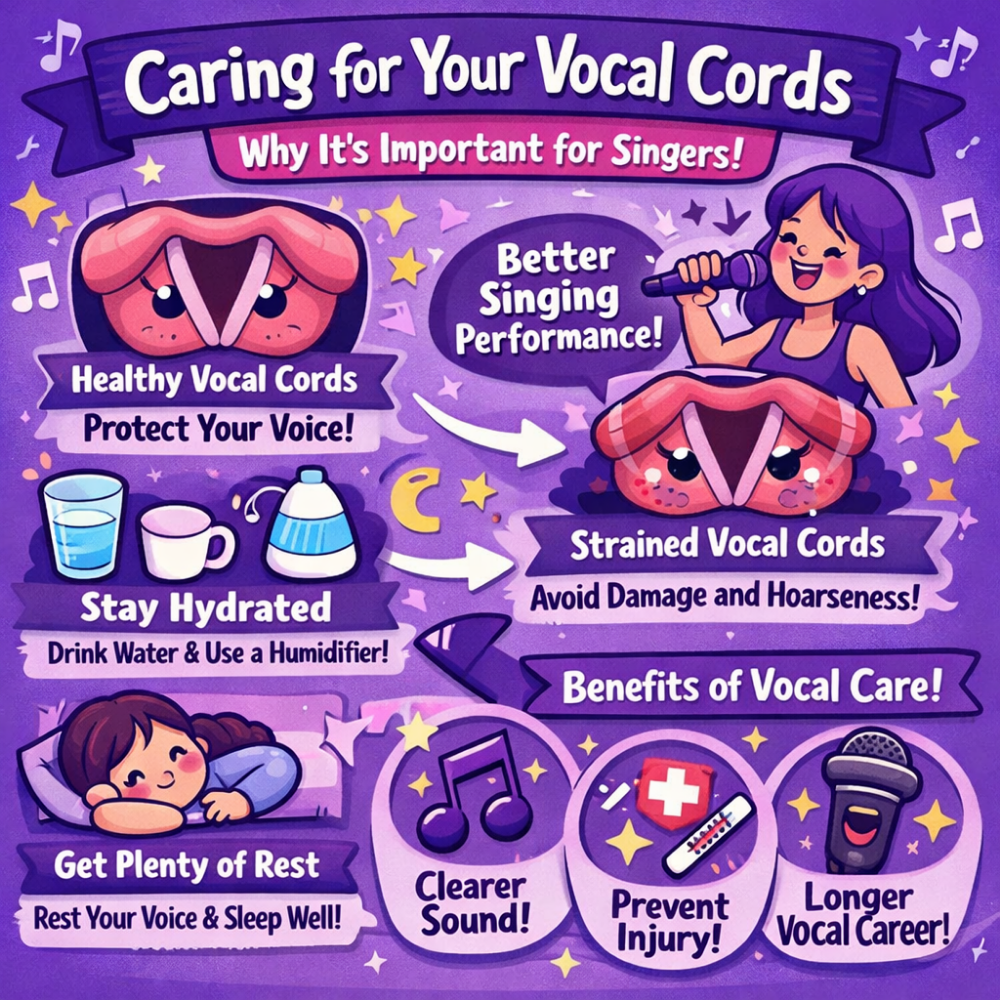
How to Care for Your Vocal Cords When Singing And Why It’s So Important


Caring for your vocal cords is essential for every singer, whether you are a beginner or a professional. Your vocal cords are delicate muscles that play a crucial role in producing sound, and without proper care, they can become strained, irritated, or even damaged. Learning how to maintain healthy vocal cords not only improves your singing performance but also protects your voice for long-term use.

One of the most important aspects of vocal care is staying hydrated. Drinking enough water keeps your vocal cords lubricated, allowing them to vibrate freely and produce a clear, smooth sound. Dehydration can lead to dryness, hoarseness, and increased vocal strain. Using a humidifier, especially in dry environments, can also help maintain optimal moisture levels for your voice.

Another key factor is proper vocal warm-ups. Gentle vocal exercises prepare your vocal cords for singing by gradually increasing flexibility and strength. Skipping warm-ups can lead to tension and increase the risk of vocal injury. Along with warm-ups, practicing good breathing techniques, such as deep diaphragmatic breathing, helps support your voice and reduces unnecessary strain on the throat.

Maintaining good posture is often overlooked but incredibly important. Standing or sitting upright allows for better airflow and breath control, which directly impacts vocal performance. Poor posture can restrict your breathing and force your vocal cords to work harder than necessary.

Equally important is knowing when to rest your voice. Overusing your voice without proper breaks can lead to fatigue and long-term damage. Getting enough sleep and allowing your vocal cords time to recover is essential for maintaining vocal health.

Avoiding harmful habits is also crucial. This includes minimizing shouting, limiting caffeine and alcohol (which can dehydrate you), and avoiding smoking or exposure to irritants. Being mindful of these factors helps prevent inflammation and long-term vocal issues.

The benefits of proper vocal cord care are significant. Singers who take care of their voices experience clearer tone, improved vocal control, better endurance, and reduced risk of injury. Healthy vocal cords allow you to sing with confidence, reach higher notes with ease, and maintain consistency in your performances.

In the long run, taking care of your vocal cords leads to a longer and more sustainable singing career. Your voice is your instrument, and just like any instrument, it requires regular care and attention. By developing healthy vocal habits, you not only enhance your singing ability but also ensure that your voice remains strong and reliable for years to come.

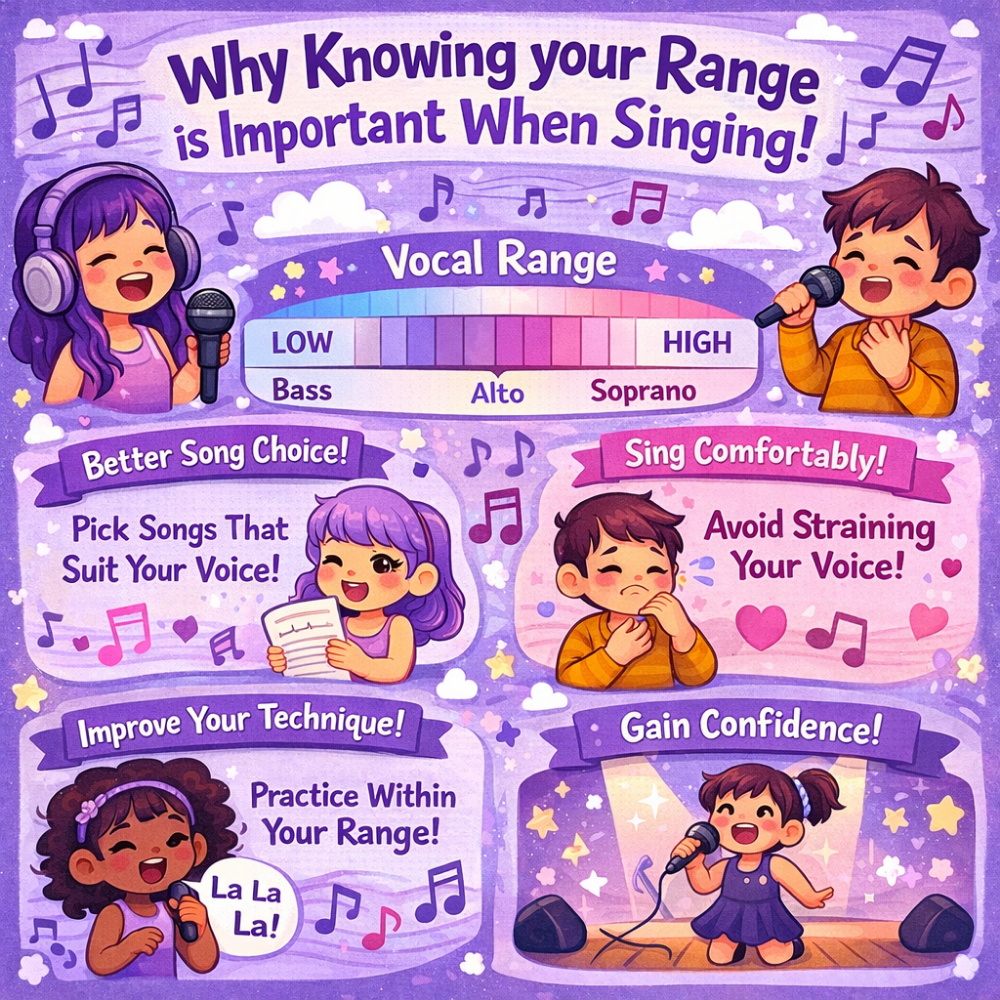
Why Knowing Your Vocal Range Is Important for Singing | Improve Technique, Confidence & Vocal Health 

Understanding your vocal range is one of the most important steps in becoming a confident, healthy, and expressive singer. Your vocal range refers to the span of notes you can comfortably sing, from your lowest to your highest pitch. When you know your range—whether you are a bass, alto, tenor, or soprano—you can make smarter song choices, improve your vocal technique, and protect your voice from strain or damage.

Singing within your natural range allows you to perform with ease and control, rather than forcing notes that feel uncomfortable or unreachable. This not only helps prevent vocal fatigue and injury but also enhances your tone quality, pitch accuracy, and overall sound. When singers push beyond their limits without proper training, it can lead to hoarseness, tension, and long-term vocal issues. Knowing your range helps you avoid these risks while building a strong and sustainable voice.

Another key benefit of understanding your vocal range is better song selection. Choosing songs that suit your voice means you can showcase your strengths, sound more polished, and enjoy singing more. Whether you’re performing, recording, or practicing, songs that fit your range will naturally feel more comfortable and enjoyable, helping you stay motivated and consistent.

Working within your range also plays a major role in developing proper vocal technique. It allows you to focus on breath control, resonance, and vocal placement without unnecessary strain. As your technique improves, your range can gradually expand in a healthy and controlled way, giving you more flexibility over time.

Finally, knowing your vocal range builds confidence. When you understand your voice and what it can do, you sing with more assurance and expression. Confidence shines through in performances, helping you connect with your audience and truly enjoy the experience of singing.

Whether you are a beginner or an experienced singer, learning your vocal range is essential for vocal health, skill development, and long-term success. By respecting your voice and working within your natural limits, you unlock your full singing potential and create a strong foundation for growth.

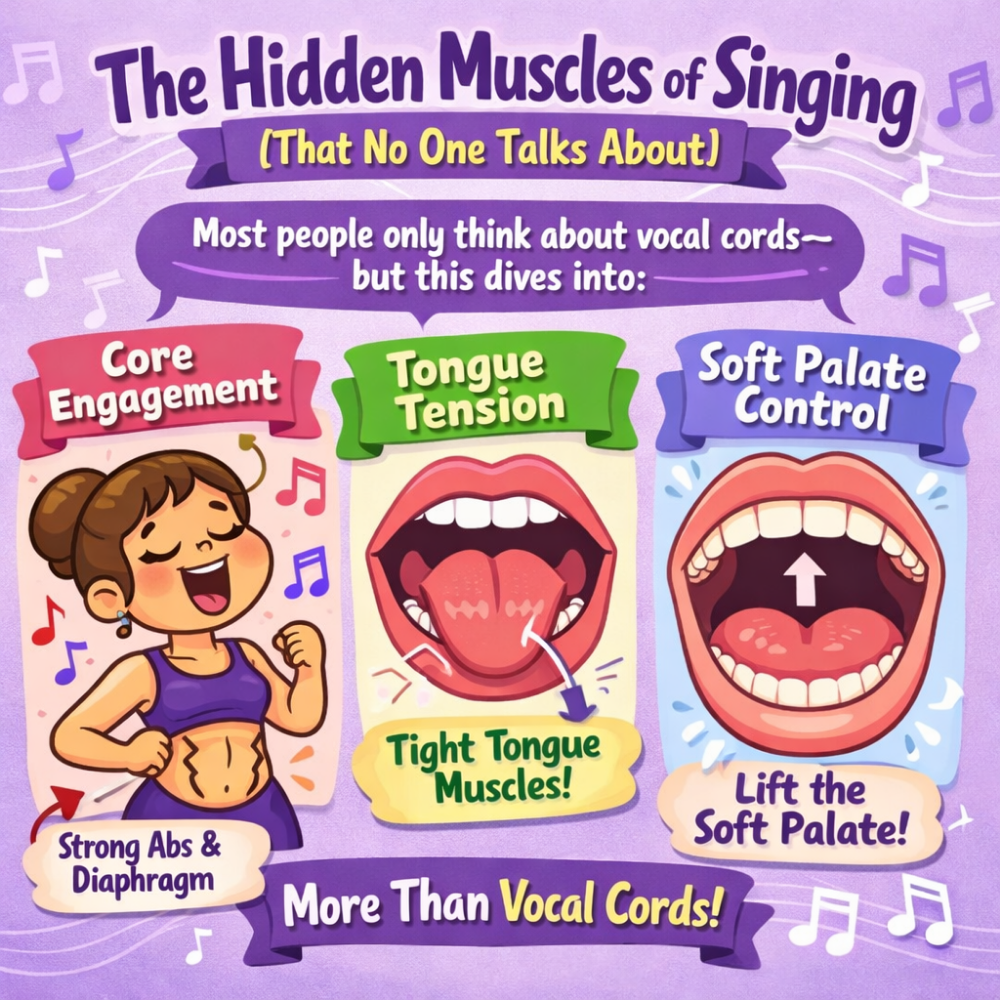
The Hidden Muscles of Singing: Unlock Better Vocal Control with Core Strength, Tongue Relaxation & Soft Palate Technique


Most singers focus only on their vocal cords, but true vocal power and control come from the hidden muscles of singing that are often overlooked. Understanding and training these essential muscle groups can dramatically improve your tone, range, breath control, and overall vocal performance.

At the core of great singing lies strong core engagement and diaphragm support, which provide the stability needed for controlled airflow and sustained notes. Without proper breath support, singers often experience strain, fatigue, and inconsistent sound.

Another commonly ignored factor is tongue tension. A tight or restricted tongue can block resonance, limit vocal freedom, and create unwanted strain in the throat. Learning how to relax and position the tongue correctly allows for clearer tone, better articulation, and smoother vocal transitions.

Equally important is soft palate control, which plays a major role in resonance and vocal placement. Lifting the soft palate helps create a fuller, richer sound while preventing a nasal tone. This technique is essential for achieving professional vocal quality and projection.

By developing awareness of these hidden muscles—core, tongue, and soft palate—you can unlock a more powerful, flexible, and healthy voice. Whether you are a beginner or experienced singer, mastering these foundational techniques will elevate your singing, build confidence, and help you perform with ease and control.

Perfect for vocal students, performers, and anyone serious about improving their singing technique, this knowledge goes far beyond the basics—because great singing is about more than just vocal cords.


How to Pick the Right Song for Your Voice | Find Your Vocal Range, Style & Confidence


Choosing the right song for your voice is one of the most important steps in becoming a confident and expressive singer. The right song not only complements your vocal range but also enhances your tone, control, and emotional delivery. Whether you’re a beginner or an experienced vocalist, understanding how to match a song to your unique voice can dramatically improve your performance and protect your vocal health.

Start by identifying your vocal range—knowing whether you are a soprano, alto, tenor, or bass helps you avoid songs that strain your voice or sit too low to showcase your tone. Next, consider your vocal strengths, such as power, softness, agility, or tone quality, and choose songs that highlight what you naturally do best. Picking the right genre is equally important; singing a style you genuinely connect with—whether pop, jazz, musical theatre, or classical—will make your performance more authentic and enjoyable.

Lyrics also play a key role in song selection. Choose songs that resonate with your personality and experiences so you can deliver them with genuine emotion. Feeling comfortable with a song builds confidence, allowing you to focus on technique, breath control, and expression rather than struggling to keep up.

Additionally, always test songs in different keys to find the most comfortable fit for your voice. Transposing a song can make a significant difference in how easily you can sing it and how polished you sound. Practicing songs that suit your voice helps you develop better technique, avoid vocal strain, and build long-term vocal strength.

By selecting the right song for your voice, you set yourself up for success—improving your vocal performance, increasing confidence, and making every performance more enjoyable and impactful.


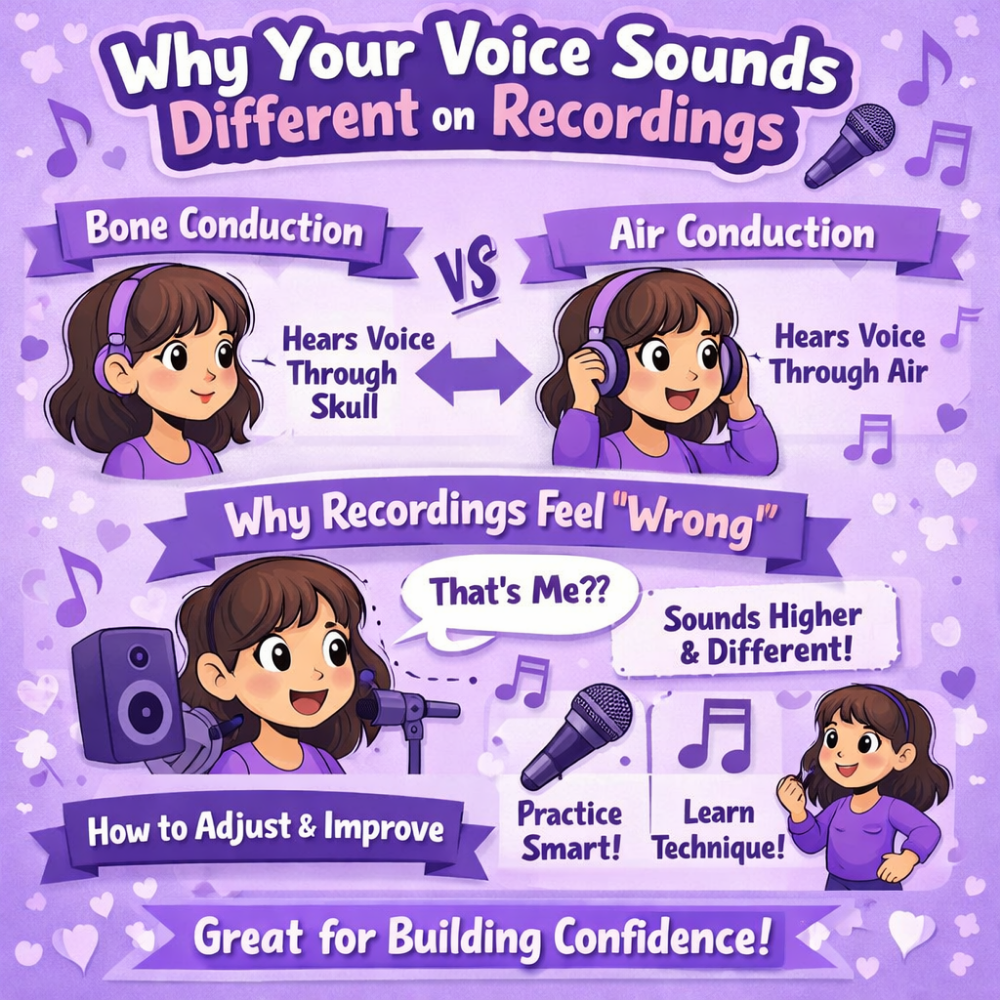
Why Your Voice Sounds Different on Recordings | Bone vs Air Conduction Explained for Better Vocal Confidence:

Have you ever wondered, “Why does my voice sound so different on recordings?” This common and often frustrating experience is something every singer and speaker faces—but understanding it can completely transform your confidence and vocal technique.


In this educational guide, we break down the science behind bone conduction vs air conduction, explaining how you hear your voice internally versus how others hear it externally. When you speak or sing, vibrations travel through your skull (bone conduction), making your voice sound deeper and richer to you. However, recordings capture your voice through air conduction—what everyone else actually hears—which can make it sound higher or unfamiliar.


This difference is the main reason recordings can feel “wrong” or even uncomfortable to listen to. But don’t worry—this is completely normal and not a reflection of a “bad” voice!More importantly, we show you how to adjust and improve your vocal technique, helping you become more comfortable with your recorded sound. With the right training, awareness, and vocal health practices, you can build confidence, refine your tone, and embrace your true voice.


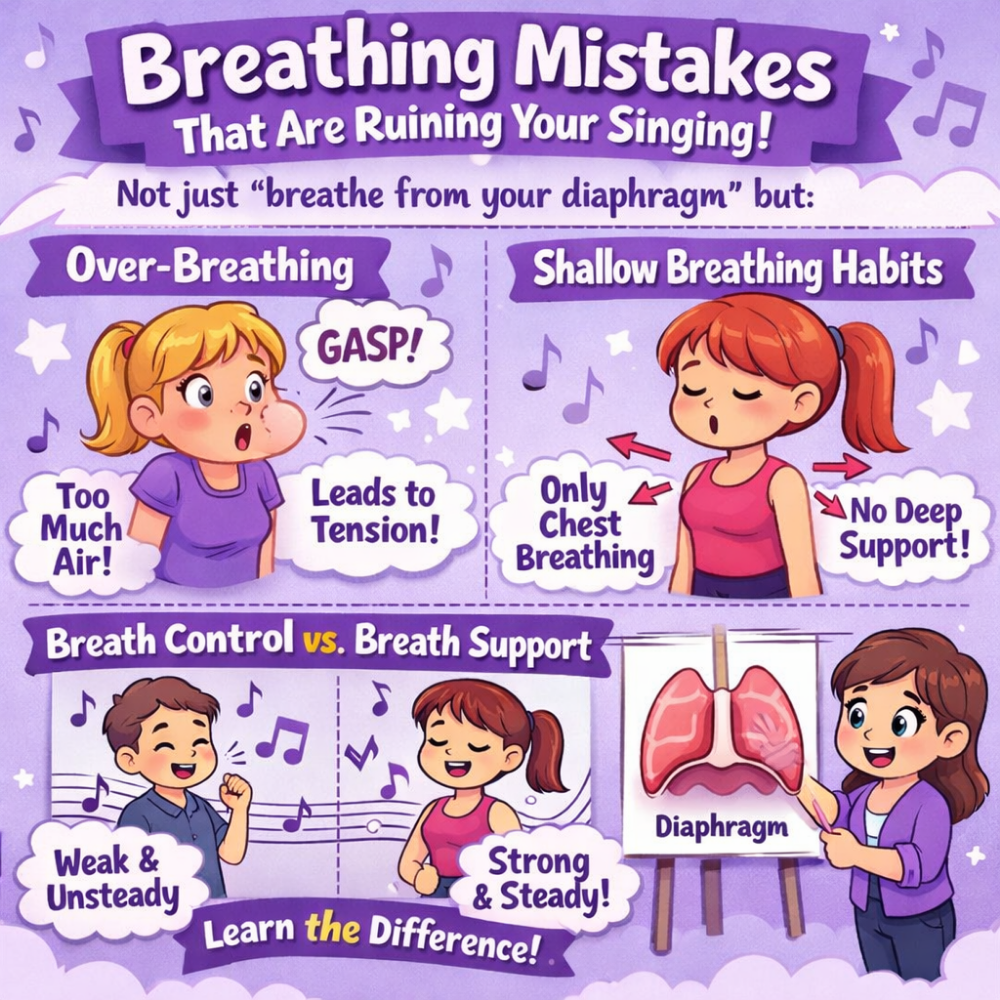
Breathing Mistakes That Are Ruining Your Singing (And How to Fix Them)

Many singers have heard the advice: “Just breathe from your diaphragm.”


But the truth is, that statement alone is incomplete—and often misunderstood.
Poor breathing habits are one of the biggest reasons singers struggle with control, tension, pitch, and vocal fatigue.


Let’s break down three of the most common breathing mistakes that could be holding your voice back:


1. Over-Breathing (Taking in Too Much Air)
More air does NOT mean better singing.
Over-breathing creates excess pressure in the body, leading to:
Throat tension
Loss of control
A strained, pushed sound
Instead of helping, it actually overwhelms your vocal system. Singing requires efficient airflow—not maximum airflow.


2. Shallow Breathing Habits


This is when breathing stays high in the chest rather than expanding through the ribcage and lower torso.
Shallow breathing leads to:
Weak, unsupported tone
Instability in pitch
Running out of breath too quickly
True breath efficiency comes from allowing the body to expand naturally—especially around the ribs and back—not forcing a “big inhale.”


3. Confusing Breath Control with Breath Support
These are NOT the same thing, and misunderstanding this can limit your vocal progress.
Breath Control = Managing how slowly and steadily air is released
Breath Support = The coordinated engagement of muscles (especially around the core and ribs) to resist and stabilize airflow
Without proper support, control becomes inconsistent.
Without control, support becomes ineffective.You need both working together.


Great singing isn’t about forcing bigger breaths—it’s about building a balanced, responsive system where airflow and muscle engagement work with your voice, not against it.


When breathing is efficient:


Tone becomes fuller
Notes feel easier
Endurance improves
Tension decreases


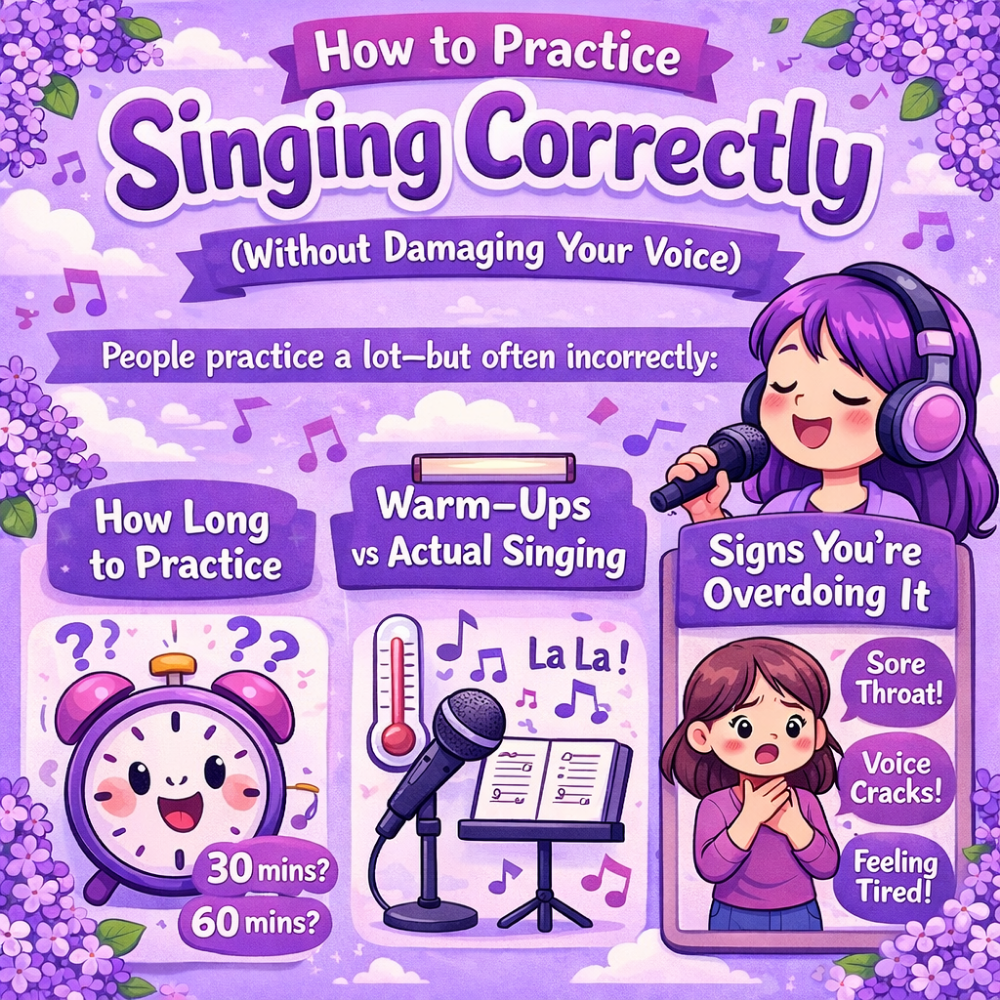
How to Practice Singing Correctly Without Damaging Your Voice | Vocal Health Tips for Safe Singing

Practicing singing correctly is essential for building a strong, expressive voice while protecting your vocal health. Whether you’re a beginner or a professional vocalist, learning proper vocal technique helps you avoid strain, fatigue, and long-term damage—allowing you to sing with confidence, power, and consistency.

Healthy singing starts with proper breathing technique. Instead of shallow chest breathing, focus on diaphragmatic breathing, where the breath expands your lower ribs and abdomen. This provides better breath control and supports your tone, reducing unnecessary tension in the throat. Controlled airflow is the foundation of vocal stability, pitch accuracy, and endurance.

Equally important is warming up your voice before singing. Just like athletes prepare their muscles, singers must gently activate their vocal cords. Start with light exercises such as lip trills, humming, and scales to gradually increase flexibility and range. Skipping warm-ups can lead to vocal strain, hoarseness, or even injury over time.

Maintaining proper posture and alignment is another key factor. Standing or sitting upright with relaxed shoulders allows your lungs to expand fully and your voice to resonate freely. Poor posture can restrict airflow and create tension, making singing feel harder than it should.

To avoid damaging your voice, it’s crucial to listen to your body and respect your limits. Pushing beyond your comfortable range or singing too loudly without support can cause strain. Instead, build your range gradually with consistent practice and proper technique. If your voice feels tired or sore, rest is essential—overuse is one of the most common causes of vocal damage.

Hydration also plays a major role in vocal health. Drinking plenty of water keeps your vocal cords lubricated, helping them vibrate smoothly and reducing the risk of irritation. Avoid excessive caffeine, smoking, or shouting, as these can dry out or harm your voice.

Practicing with correct technique and mindful repetition leads to long-term improvement. Focus on tone quality, pitch control, and resonance rather than just volume or power. Recording yourself, working with a vocal coach, or following structured exercises can help you identify areas for growth and ensure you’re practicing effectively.

By combining proper breathing, consistent warm-ups, good posture, vocal awareness, and healthy habits, you can develop a strong, flexible voice without causing harm. Singing should feel comfortable, supported, and enjoyable—not forced or painful. With the right approach, you’ll not only protect your voice but also unlock its full potential for beautiful, expressive performance.

Colorful singing infographic showing how to find your unique voice, with illustrations of a singer developing confidence, avoiding imitation, and building a natural tone and personal vocal style.

How to Find Your Unique Singing Voice (Stop Copying Other Singers & Discover Your True Sound)

Finding your unique voice as a singer is one of the most powerful and transformative steps in your musical journey. Many vocalists begin by imitating their favorite artists, but true growth comes when you move beyond copying and discover the authentic sound that sets you apart.

Your unique voice is shaped by your anatomy, personality, emotions, and life experiences. No two voices are the same, which means your sound already has something special to offer. Instead of trying to sound like another singer, focus on understanding your natural tone, vocal range, and strengths. Recording yourself regularly is a great way to hear what you actually sound like and identify what makes your voice different.

To stop copying other singers, start by using them as inspiration rather than imitation. Study their techniques—such as breath control, phrasing, and dynamics—but apply those skills in a way that feels natural to you. Experiment with different styles, vocal textures, and emotional delivery to find what resonates with your voice. This process helps you build confidence and originality.

Developing vocal awareness is key. Pay attention to how your voice feels when you sing comfortably versus when you strain to mimic someone else. Your authentic voice will feel more relaxed, controlled, and expressive. Working on proper vocal technique, including posture, breath support, and resonance, will also help you unlock your natural sound without forcing it.

Emotion plays a huge role in discovering your voice. When you connect deeply with the lyrics and meaning of a song, your voice naturally becomes more genuine. Instead of focusing on sounding “perfect,” aim to communicate feeling and storytelling—this is what truly connects with listeners.

Consistency is essential. Regular practice, vocal exercises, and even working with a vocal coach can guide you toward refining your unique tone. Over time, you’ll notice that your voice becomes more distinct, confident, and recognizable.

In a world full of talented singers, authenticity is what makes you stand out. Embrace your individuality, trust your sound, and allow your voice to evolve naturally. Your uniqueness is your greatest strength—lean into it, and you’ll not only stop copying other singers, but you’ll also develop a voice that is truly your own.


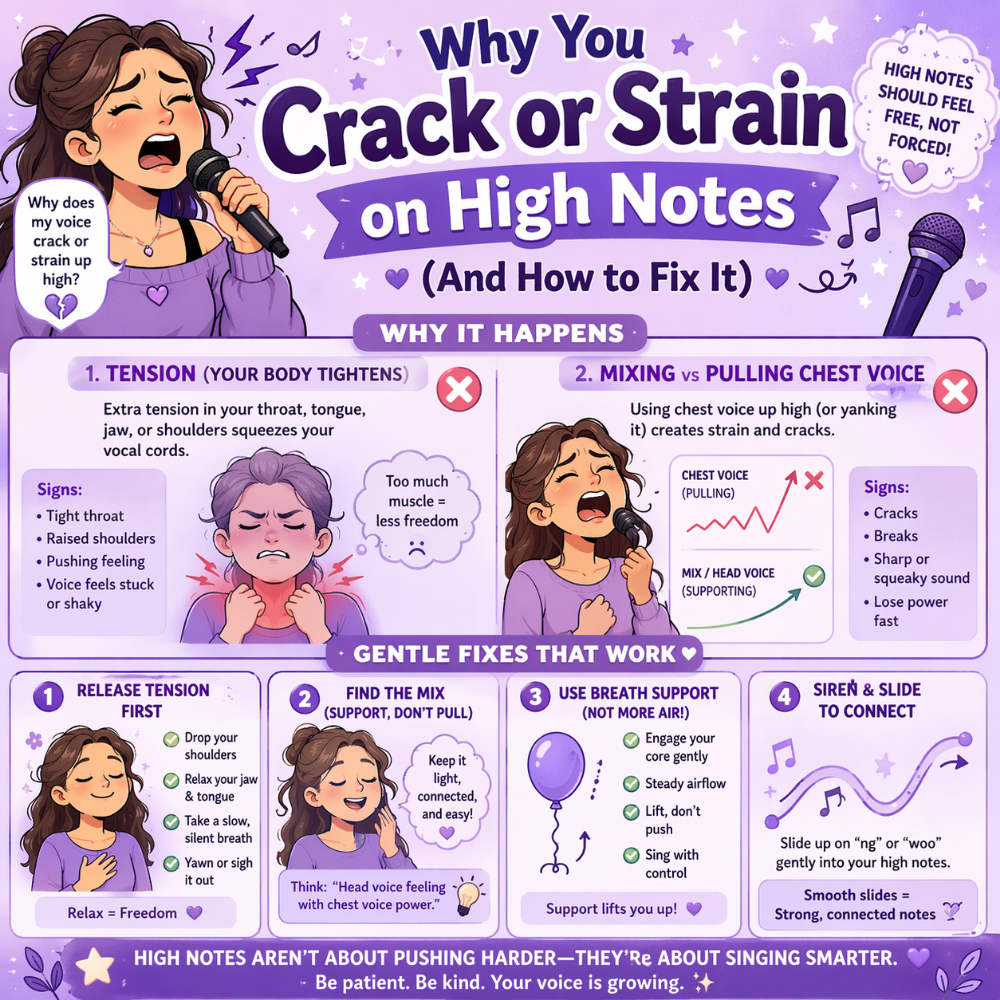
Why You Crack or Strain on High Notes (And How to Fix It Fast) 


Struggling with cracking or straining on high notes is one of the most common challenges singers face—whether you’re a beginner or more advanced. If your voice feels tight, breaks unexpectedly, or sounds forced when you reach higher pitches, it’s usually a sign of imbalance in your vocal technique, not a lack of talent.


Why Your Voice Cracks or Strains on High Notes


1. Lack of Proper Breath Support
High notes require consistent airflow and control. If your breathing is shallow or unsupported, your vocal cords compensate by tightening, which leads to strain or cracks.

2. Tension in the Throat and Neck
Many singers unknowingly “push” for high notes by tightening their throat, jaw, or neck muscles. This restricts the vocal cords and prevents them from stretching freely, causing instability.

3. Poor Vocal Cord Coordination
Your vocal cords need to adjust and thin out as pitch rises. If they don’t coordinate smoothly, your voice may flip or crack between registers (chest voice to head voice).

4. Not Transitioning Between Registers Properly
Ignoring your “mix” or head voice and trying to drag your chest voice too high is a major cause of strain. This creates unnecessary pressure and leads to vocal fatigue.

5. Lack of Warm-Up and Technique
Jumping straight into demanding notes without warming up your voice can shock your vocal cords, making them less flexible and more prone to cracking.


How to Fix Cracking and Straining on High Notes


1. Develop Strong Breath Support
Focus on diaphragmatic breathing. Engage your core and maintain steady airflow—don’t let your breath collapse as you sing higher.

2. Relax Your Body and Release Tension
Keep your jaw, tongue, and shoulders relaxed. Think of “lifting” into high notes rather than pushing. Gentle stretches and posture alignment can help.

3. Train Your Mix Voice
Blending chest and head voice (your mix) allows you to hit high notes with power without strain. Practice light, controlled exercises like lip trills and sirens.

4. Use Proper Vocal Placement
Instead of forcing sound from your throat, aim to place your voice forward (in the mask area—around your nose and cheekbones). This improves resonance and reduces pressure.

5. Warm Up Correctly
Always start with gentle vocal warm-ups. Scales, humming, and semi-occluded exercises prepare your voice for higher ranges safely.

6. Build Range Gradually
Don’t force notes that are out of your current range. Expand your range over time with consistent, healthy practice.


If it feels painful, tight, or forced—you’re doing too much. High notes should feel supported and free, not strained. With the right technique, hitting high notes becomes easier, more consistent, and far more enjoyable.

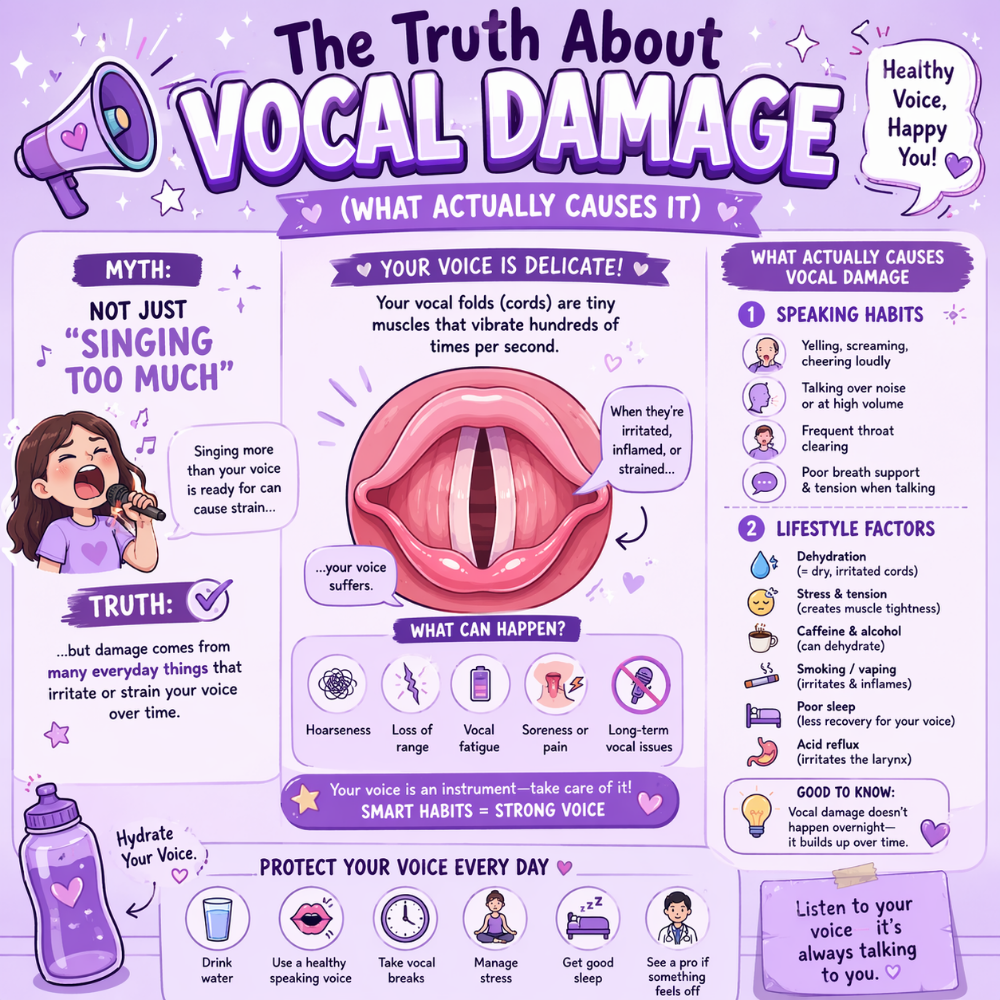
The Truth About Vocal Damage (What Actually Causes It)


Vocal damage is one of the most misunderstood issues among singers, speakers, teachers, and anyone who relies on their voice professionally. While many people assume that vocal injury only happens from “singing too much” or “singing loudly,” the truth is far more complex. Vocal health is influenced by technique, lifestyle, hydration, muscle coordination, and long-term vocal habits—not just volume or use.

At its core, vocal damage occurs when the delicate vocal folds (vocal cords) are exposed to excessive strain, friction, or inflammation over time. This can lead to conditions such as vocal nodules, polyps, hemorrhaging, or chronic hoarseness. However, the real causes often go unnoticed until symptoms become persistent.

One of the primary causes of vocal damage is poor vocal technique. Many people unknowingly push their voice from the throat instead of using proper breath support from the diaphragm. This creates unnecessary pressure on the vocal folds, forcing them to collide with more force than they are designed to handle. Over time, this repetitive strain can lead to swelling and tissue thickening.

Another major factor is overuse without recovery. Just like any muscle in the body, the voice needs rest. Constant speaking, shouting, or singing—especially without vocal breaks—prevents the vocal folds from healing micro-irritations that naturally occur during use.

Dehydration is another silent contributor. The vocal folds need proper hydration to stay flexible and vibrate efficiently. When the body is dehydrated, the vocal tissue becomes dry and stiff, increasing friction and making the voice more vulnerable to injury.

Environmental and lifestyle factors also play a significant role. Exposure to smoke, pollution, excessive caffeine or alcohol, and even acid reflux can irritate and inflame the vocal folds. Acid reflux, in particular, is often overlooked but can silently damage the voice by exposing it to stomach acids during sleep or digestion.

Incorrect warm-ups and poor vocal habits—such as singing out of range, forcing high notes, or using excessive vocal tension—are also common causes of long-term vocal strain. Many vocal injuries develop gradually from repeated small habits rather than one major incident.

Stress and emotional tension can also manifest physically in the voice. Tight neck, jaw, and shoulder muscles can restrict healthy vocal production, forcing the voice to work harder than necessary.

The truth is, vocal damage is rarely caused by one single moment. It is usually the result of repeated misuse, lack of awareness, and poor vocal hygiene over time.

The good news is that most vocal damage is preventable. With proper technique, breath support training, hydration, rest, and healthy vocal habits, the voice can remain strong, flexible, and resilient for years.

Understanding what truly causes vocal damage is the first step toward protecting your voice—and unlocking its full, healthy potential.


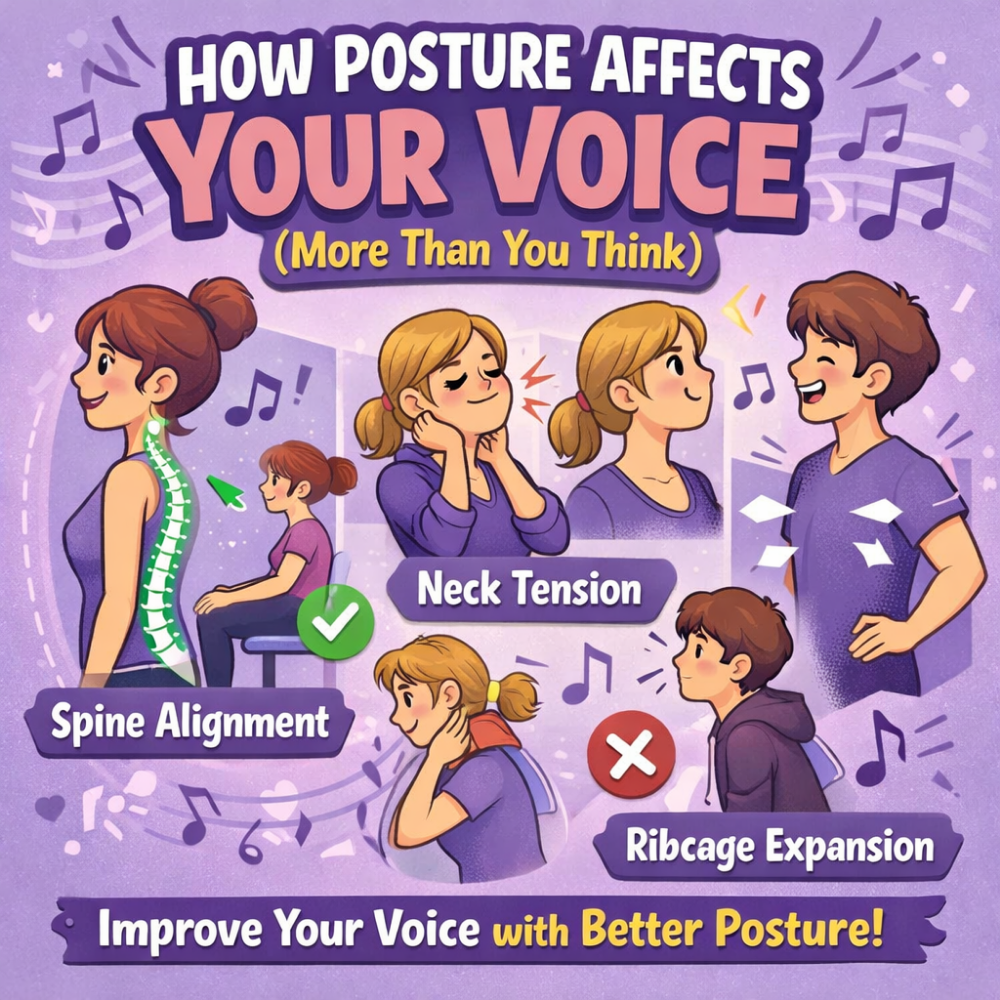
How Posture Affects Your Voice (More Than You Think)


Your posture plays a far greater role in vocal performance than most people realize. Whether you are singing, speaking professionally, teaching, or presenting, the alignment of your body directly influences breath control, vocal tone, resonance, and vocal health.

When your posture is properly aligned—head balanced over the spine, shoulders relaxed, chest open, and pelvis neutral—it allows your diaphragm to function efficiently. This means your lungs can fully expand, giving you better breath support, longer phrases, and a stronger, more controlled voice. Good posture also reduces unnecessary tension in the neck, jaw, and throat, which are common areas where vocal strain develops.

On the other hand, poor posture such as slouching, forward head position, or collapsed chest restricts airflow and compresses the vocal mechanism. This often leads to a weaker tone, vocal fatigue, pitch instability, and even long-term vocal damage. Many singers and speakers struggle with vocal inconsistency not because of technique alone, but because their body alignment is working against them.

Posture also affects resonance—the richness and clarity of your voice. An open, balanced posture allows sound to vibrate freely through the vocal tract, enhancing tone quality and projection without forcing volume. This is why trained vocalists and public speakers often focus as much on body awareness as they do on vocal exercises.

Improving posture is one of the simplest yet most powerful ways to transform your voice. With consistent awareness and practice, you can unlock greater vocal freedom, reduce strain, and achieve a more confident, resonant sound that carries naturally.

In short, your voice is not just produced by your vocal cords—it is supported by your entire body. When your posture improves, your voice follows.


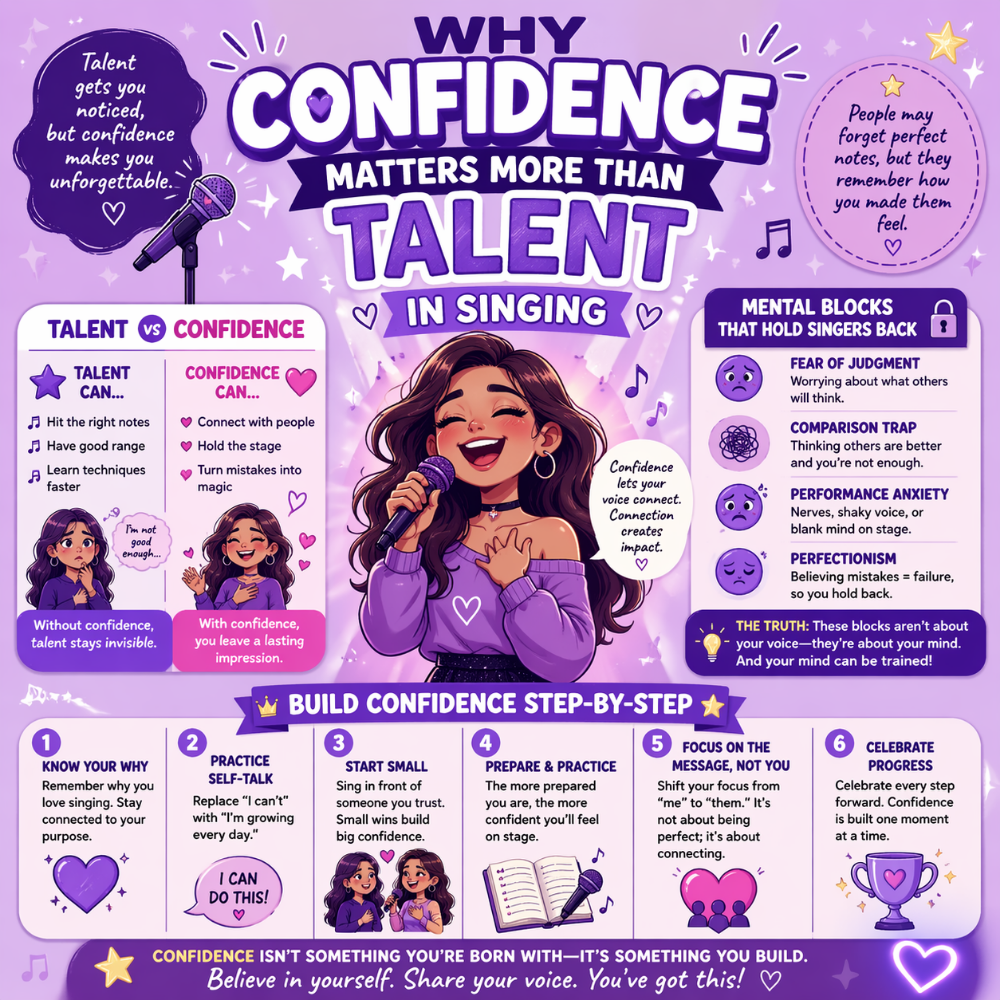
Why Confidence Matters More Than Talent In Singing


Confidence in singing often matters more than natural talent because it directly shapes how your voice is delivered, perceived, and developed over time. While talent gives you a starting point, confidence unlocks your ability to use your voice freely, express emotion authentically, and connect with your audience on a deeper level.

When a singer lacks confidence, tension builds in the body—especially in the throat, jaw, and diaphragm—restricting vocal range, tone, and control. On the other hand, confident singers allow their voices to flow naturally, resulting in better breath support, clearer tone, and improved pitch accuracy. This is why many technically “less talented” singers can outperform naturally gifted ones—they believe in their voice and use it fully.

Confidence also plays a huge role in stage presence. Audiences are drawn to singers who feel comfortable, expressive, and emotionally connected to the music. Even small imperfections are often overlooked when a performer delivers with conviction and authenticity. In contrast, a technically skilled singer who appears nervous or unsure can struggle to engage listeners.

Another key factor is growth. Confident singers are more willing to practice, take risks, perform in front of others, and push through mistakes. This mindset accelerates improvement far more than relying on raw talent alone. Talent may give you ability, but confidence gives you consistency, resilience, and the courage to refine your craft.

In the long run, confidence transforms your singing from simply hitting the right notes into telling a powerful story. It turns your voice into an instrument of expression rather than just technique—making it the true foundation of a compelling and successful singer.


Vocal Health Facts for Singers | Online Singing Lessons by Miranda-Roza

Vocal Health Facts Every Singer Must Know

Learn how to protect and strengthen your voice with expert-backed vocal health tips from Miranda-Roza’s Online Singing & Vocal Lessons, helping singers across South Africa, Australia, and the United Kingdom build confidence and vocal strength.

Why Vocal Health Is Essential for Every Singer

Your voice is your instrument, and vocal health is the key to consistent, powerful singing. Without proper care, singers may experience strain, vocal fatigue, or long-term damage. Strong vocal habits improve tone, increase vocal range, and allow for better control and expression.

Top Vocal Health Tips to Protect Your Voice

  • Stay Hydrated: Proper hydration keeps vocal cords flexible and reduces strain.
  • Warm Up Properly: Vocal warm-ups prepare your voice for performance and reduce injury risk.
  • Avoid Over-Singing: Know your limits and don’t push beyond your natural range.
  • Rest Your Voice: Recovery is essential for long-term vocal strength and endurance.
  • Use Proper Technique: Healthy technique prevents damage and improves vocal tone.

Common Vocal Mistakes That Damage Your Voice

Many singers unknowingly harm their voice by skipping warm-ups, singing while sick, or using poor technique. These habits can lead to hoarseness, reduced vocal range, and long-term vocal issues if not corrected early.

Build a Strong, Healthy Singing Voice

Developing a healthy voice requires consistency, awareness, and proper guidance. With the right vocal training, singers can build confidence, improve tone quality, and maintain vocal longevity. Miranda-Roza’s online singing lessons are designed to help you sing freely, safely, and with confidence.